

Away from the crowds
Hidden gems of Istanbul’s Byzantine past

Hello,
I hope you’re well wherever you’re reading. This week I’m in Ankara. I’ve been talking at a workshop about one of the statue heads of Buddha, found in Egypt, that I wrote about two weeks ago. I’m also giving a public lecture about the way that coins embed themselves in our social rituals and shape the way we act. More on that later!
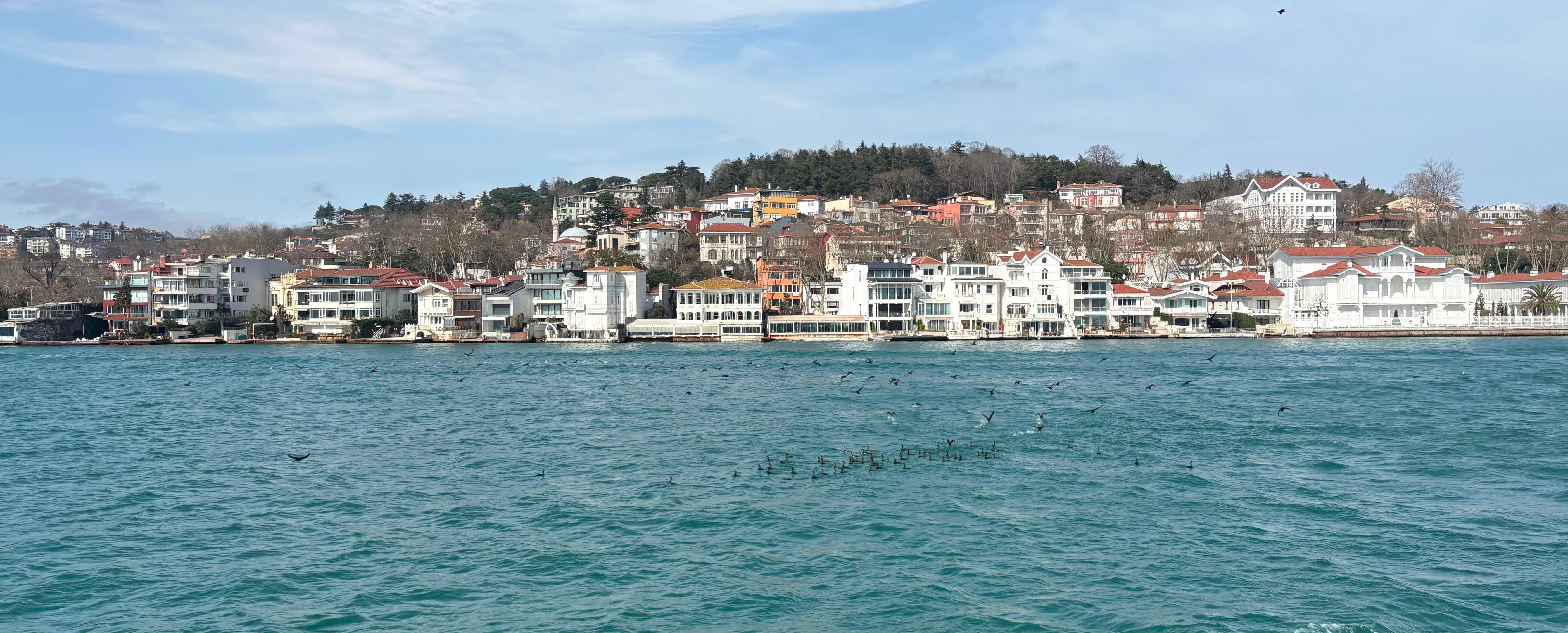
Before leaving Istanbul, though, I had a couple of days sightseeing with a friend. The weather was… seasonable: bright sunshine and blue sky one day and grey rain and a cold February wind the next. One was perfect for seeing the city from the water. We took a ferry down the Bosporus and watched sea birds glide over the waves. From the sea you can see the distinctive neighbourhoods of the city, all rising on hills or, perhaps more accurately, all crowding down to the waterfront, where houses, hotels and embassies were often built to be most visible and most decorative from the water.
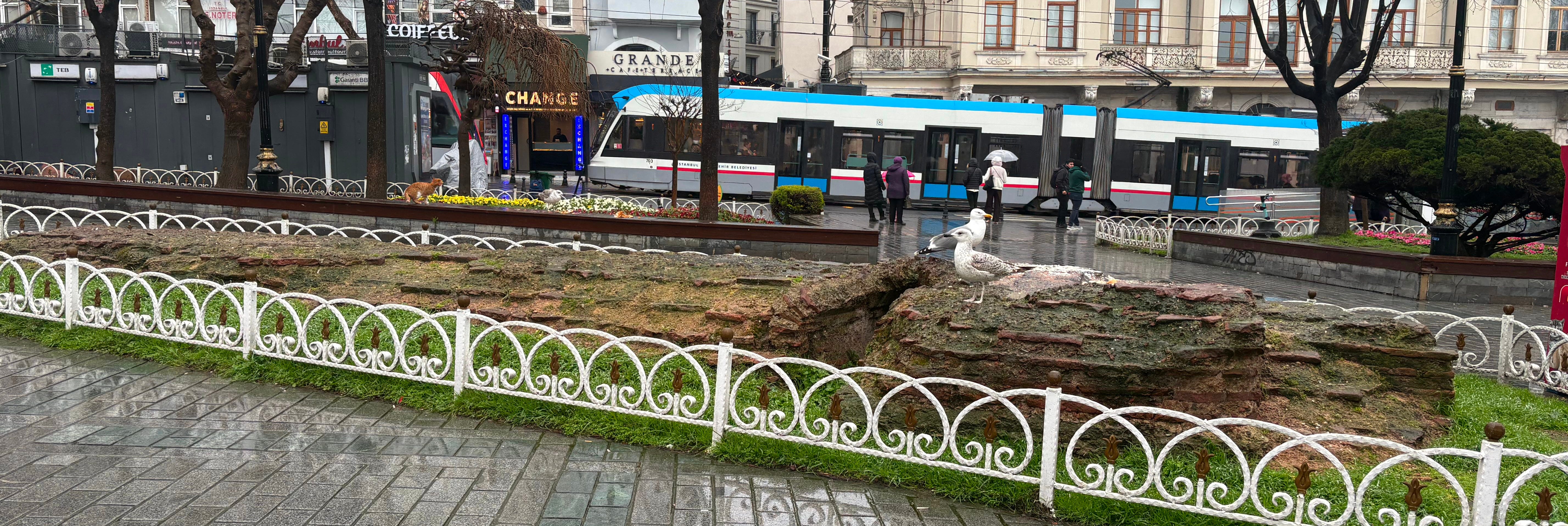
A wet and chilly day offered up different possibilities. We wandered into the old part of the city but didn’t fancy queuing in the rain for some of the most important attractions (which we have both seen before). Instead, we turned down a side street near to the historic hippodrome, the chariot-racing arena that was at the heart of political life in Constantinople, as the city was called from the fourth to the fifteenth centuries CE. For those centuries, it was the capital of the eastern Roman Empire, which is often referred to as Byzantium.
During those centuries, when Christianity was the main religion of the Roman Empire, emperors and wealthy aristocrats competed to build churches. The largest of these, the Hagia Sophia, which I’ve written about here, is famous today as one of the greatest monuments of Istanbul. After serving as the ‘great church’ of the Roman Empire for nearly a thousand years, it became a mosque, then a museum and is now a mosque again. It was rebuilt three times because of earthquake, dome collapse and damage during a riot. This third version, built in the 6th century after mobs burned down large parts of the city centre, is the core of what you see today (now with buttresses added during the Crusades, in the 13th century and minarets added in the 15th). Its system of half domes around a central dome created an enormous interior space, bigger than anything that had ever been seen before. It was innovative and exciting but there is, as the Bible says, nothing new under the sun, so what inspired it?
Perhaps the best candidate is a church built near the beginning of the sixth century, not by an emperor, but by a woman closely related to earlier emperors. Her name was Anicia Juliana and she was without doubt the richest woman in the empire. Her church, dedicated to St Polyeuktos (usually pronounced in English poll-ee-YOOK-toss) was apparently a wonder. Covered in mosaics and fine marbles, with a roof of gold, according to the 6th-century court historian, Procopius, she built it mainly to annoy and outdo the emperor Justinian. Unfortunately, not a lot of the building survives today.
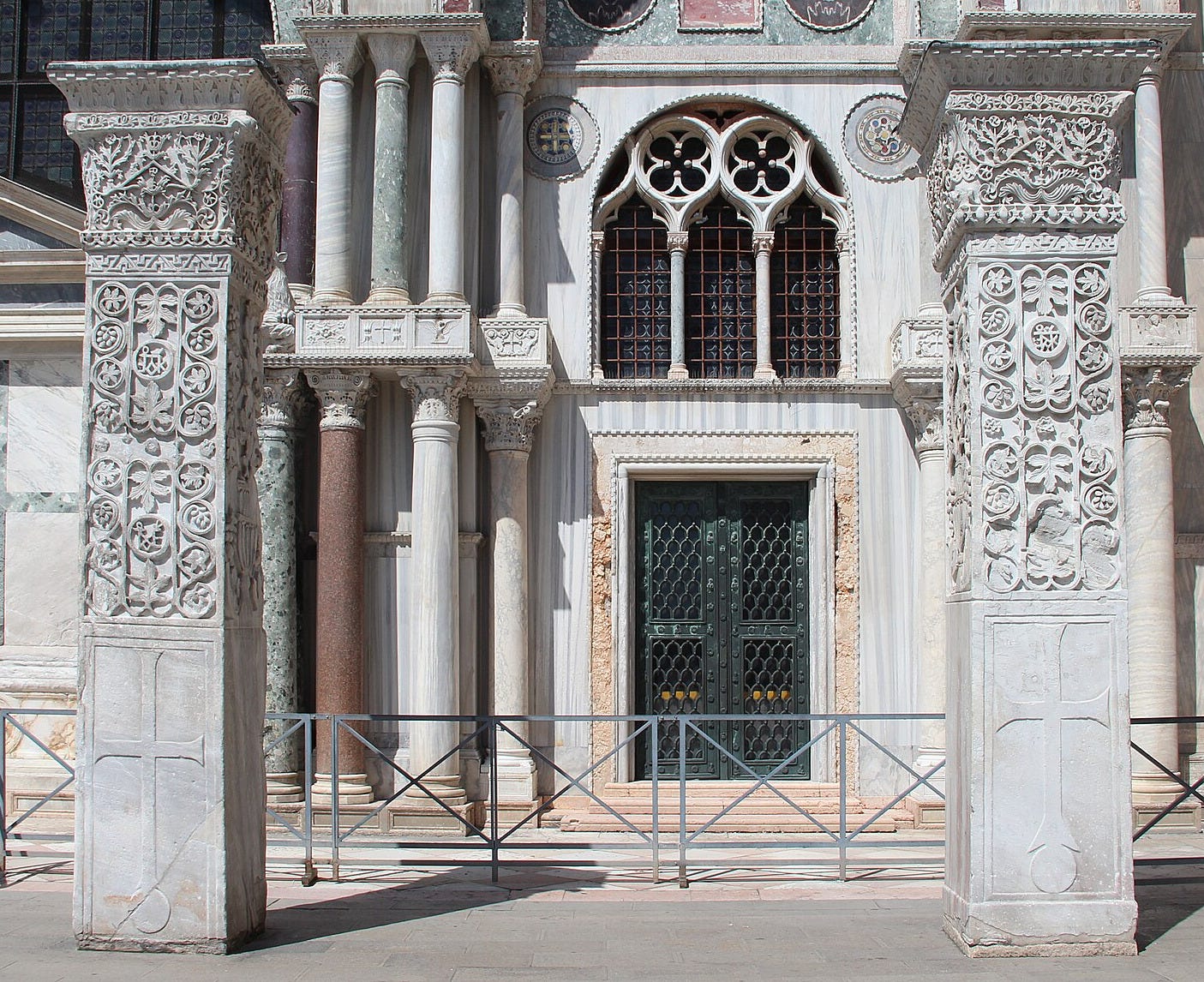
Some traces of its interior also hint at its luxury. Two pillars now outside the side entrance to the Basilica of San Marco in Venice were taken from St Polyeuktos in 1204, with fine decoration that was probably originally also painted.
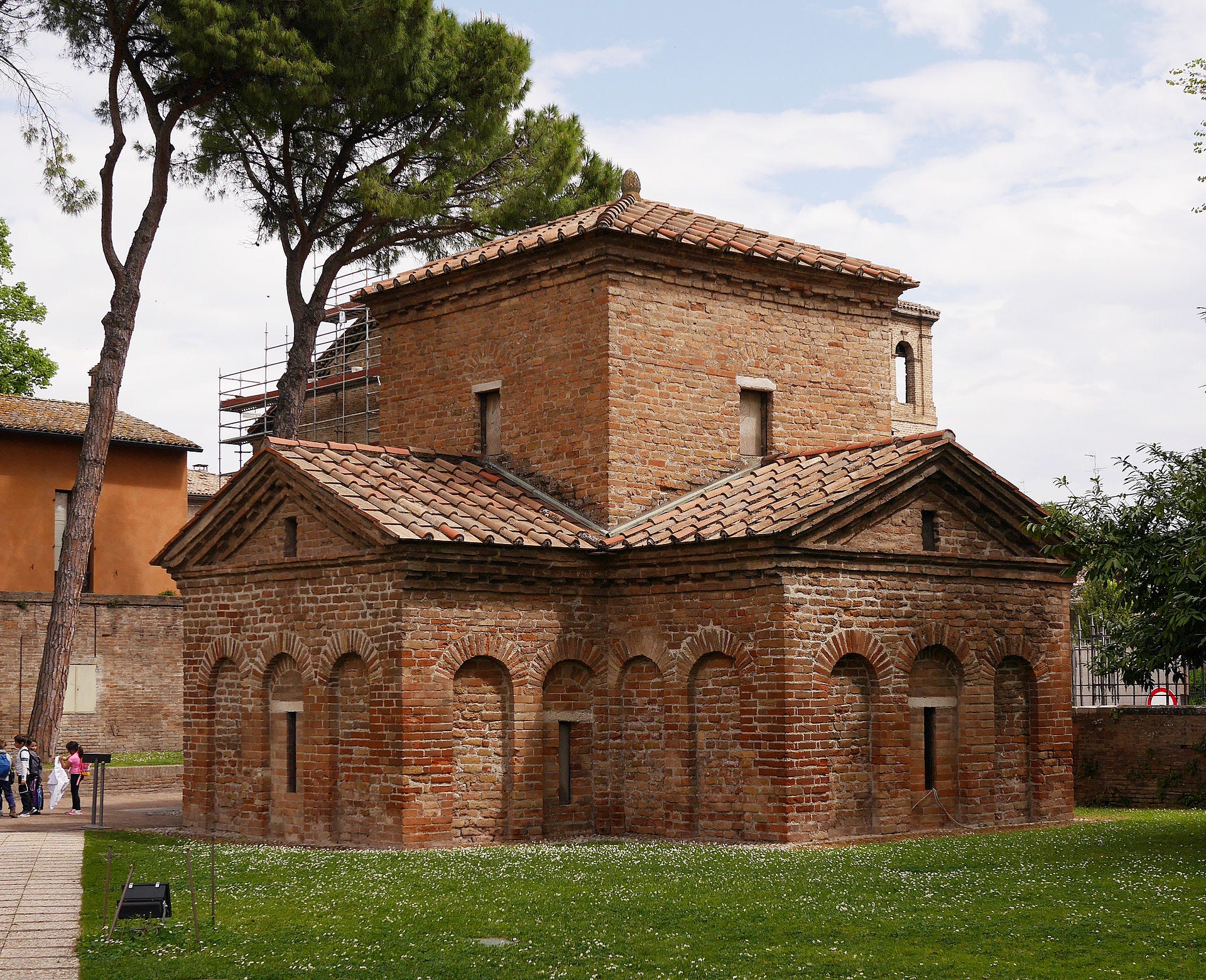
As much as St Polyeuktos was a lavish church that perhaps laid down a marker that Justinian I felt he needed to beat, it wasn’t architecturally that similar. The so-called ‘Mausoleum of Galla Placidia’ was built in the 5th century in Ravenna, in Italy. It was a Roman capital city, at that time - a regional subordinate to Constantinople. The mausoleum is pretty tiny, but four vaulted chapels support a central dome and the whole interior is lined with mosaics and marble. The shapes are still square, not rounded on the outside but its overall shape is quite like a miniature of the Hagia Sophia.
There is another church, though, that has also been claimed as part of the genesis of the Hagia Sophia, and one which showed innovations with domes in all the right places…
On a wet day in Istanbul, we went to see a building is usually referred as the ‘Little Hagia Sophia’. In fact, in Turkish its name is the Kücük Ayaysofya Camii or the Little Hagia Sophia Mosque. Originally, it was dedicated to two saints who are almost always venerated as a pair: Sergios and Bakkhos (also written Sergius and Bacchus). They are believed to have been Roman soldiers who, before Christianity was legalised in the Roman Empire, kept their faith secret. Then, one day, their fellow officers were going into a temple to sacrifice to Zeus, the top of the Roman pantheon of gods. Sergios and Bakkhos tried to avoid going into the temple. Eventually their faith was exposed. As a result, they were punished by being paraded in women’s clothing then tortured and killed. Exactly how historically true this is, is as much a matter of faith as facts. Those facts are quite thin on the ground and the earliest evidence for Sergios and Bakkhos being venerated comes from a century later. Still, by the 6th century, they were popular and respected saints, and were especially associated with the good fortune of the Roman army.
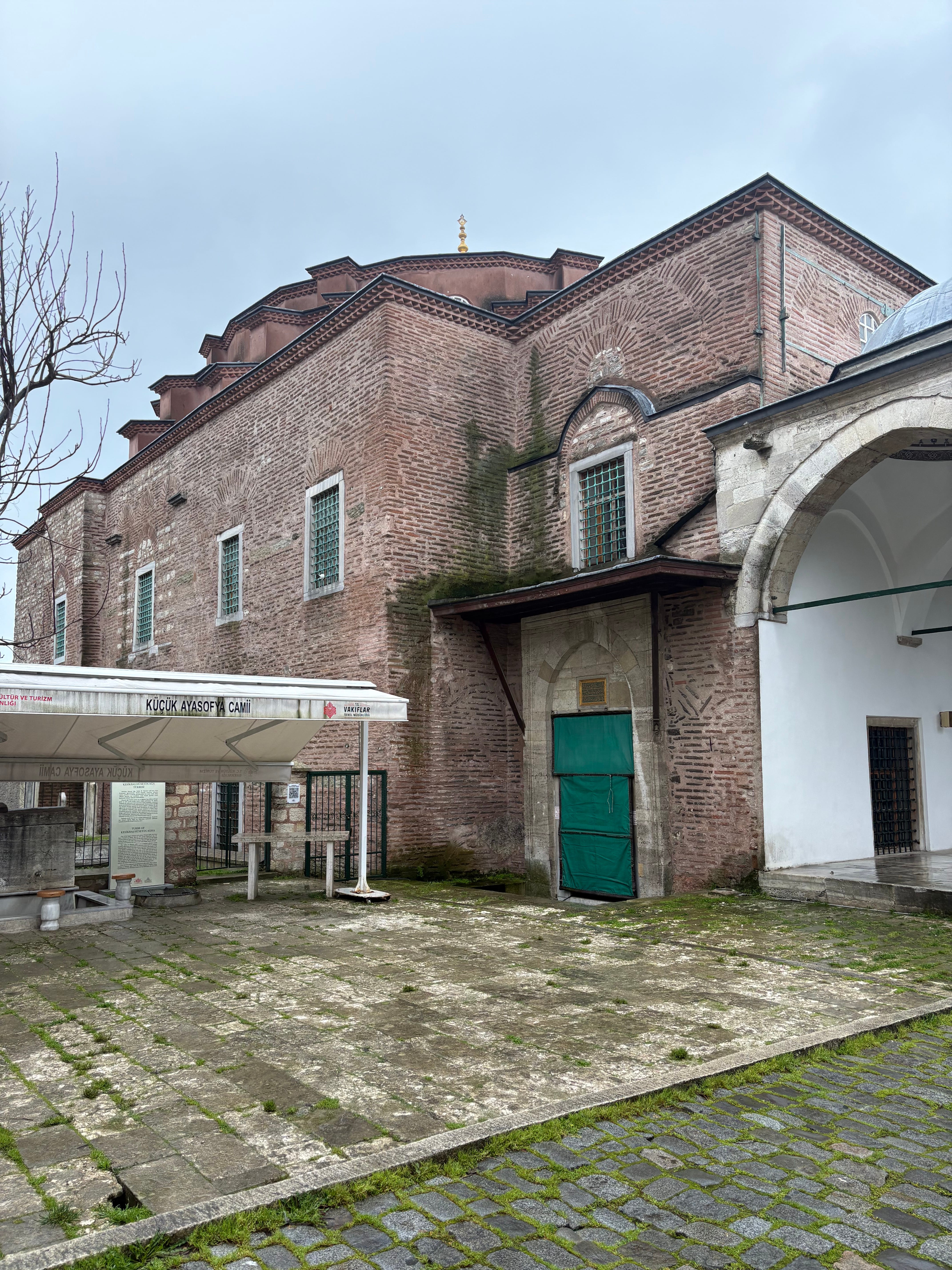
That connection with the army was one possible reason why Justinian I favoured Sergios and Bakkhos with a church. Justinian was known for his many wars, both against the powerful Persian Sasanian Empire to the Roman Empire’s east and in North Africa, Spain and Italy, where he launched campaigns to bring back Roman rule over places that had been taken over by other rulers in the preceding couple of centuries. Another reason, offered in a later legend, was that Justinian owed his life and his throne to the saints. Justinian, before he became emperor, was the deputy emperor to his uncle, Justin. Once upon a time, when Justinian was junior emperor, says the legend, plotters against him accused him of planning to assassinate his uncle. Justin deposed Justinian and locked him up, presumably awaiting mutilation or execution. Then, Sergios and Bakkhos appeared to Justin in a dream and vouched for Justinian’s good character. Moved by the saints, Justin released his nephew and restored him to power. This story comes from centuries later so perhaps it was created to fit the church, rather than the other way around, but whatever the reason, the church that is now known as the Little Hagia Sophia, was one of Justinian’s most prestigious and expensive building programmes, except for the Hagia Sophia itself.
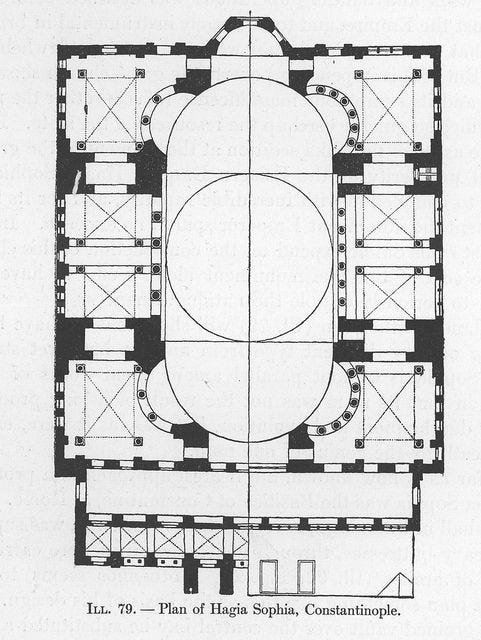
It began as a church on its own, right in the centre of the city, and then had a monastery added to it. The shape of the main church is, like the Hagia Sophia, a main dome held up by half domes, with a rectagular structure around the edge. The exact timeline of the two church projects is not clear, mainly because there is no absolutely certainty about when Sts Sergios and Bakkhos was built, but most scholars agree it was either some time (10 years or more) before the Hagia Sophia, or at roughly the same time, so it might have been an inspiration or a proof of concept, but either way, the link between the buildings seems obvious.

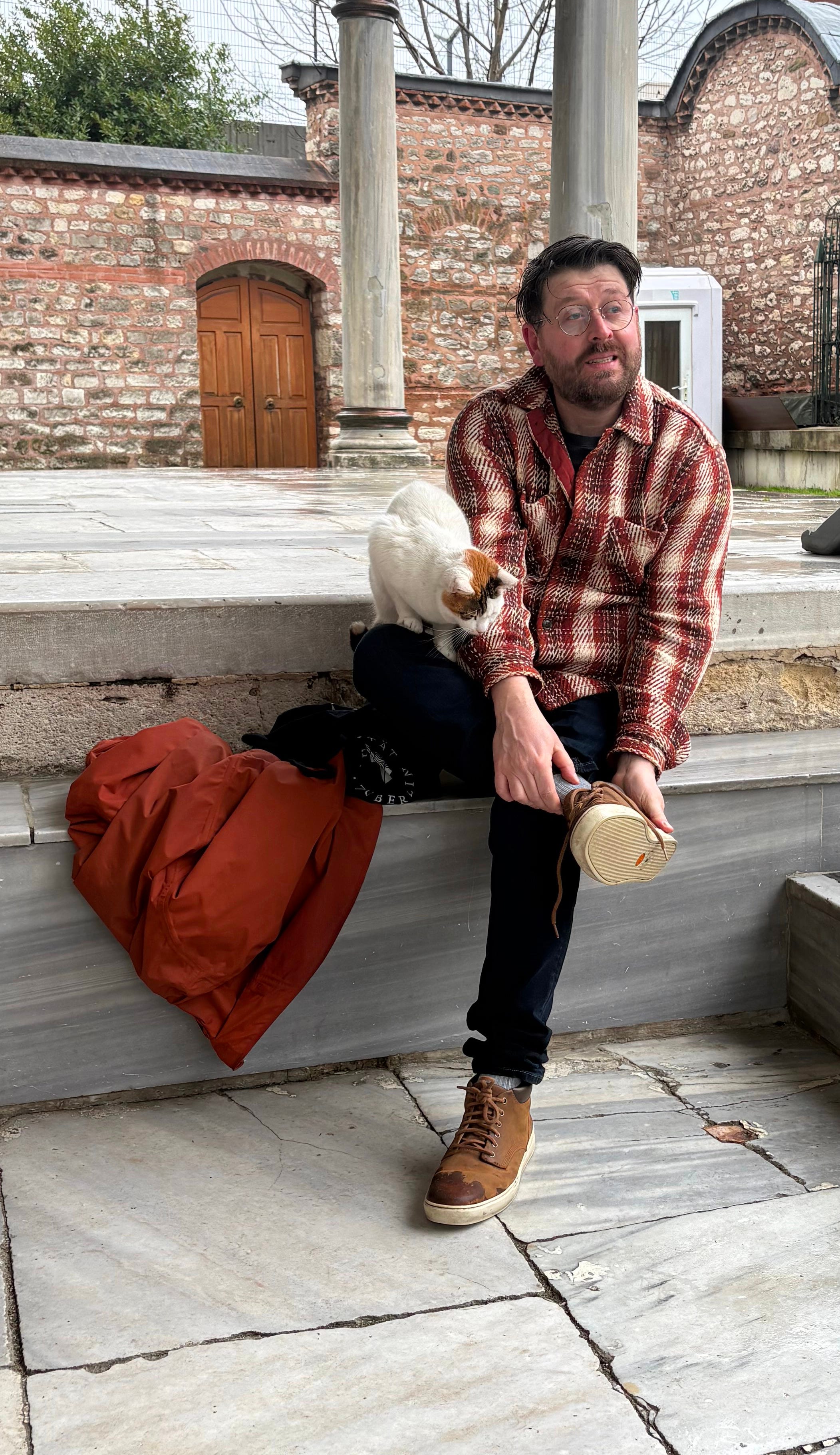
Visiting the Little Hagia Sophia Mosque today, several things stand out. It has a cat, of course. Most mosques in Istanbul do. (Actually, most businesses and public concerns of any sort have at least one…).
The building and its grounds are also beautifully quiet. Despite being less than 5 minutes’ walk from the most crowded tourist centre of Istanbul, between the Hippodrome, the Blue Mosque and the Hagia Sophia (which is also where you can visit a Roman underground cistern, the Ottoman Topkapı Palace and the beautiful Church of Holy Peace, or Hagia Eirini, another important Byzantine church), hardly anybody seems to come to the Little Hagia Sophia. At least, hardly anybody did on a wet Sunday in February.
Inside, we could wander around, sit quietly and enjoy a moment of peaceful contemplation. With a cat. The niches for the windows are set up with cushions and shelves for those wanting to read. Of all of the mosques I have visited in Istanbul, this one seems to radiate the calm of being somewhere that people can come just to take time out, get warm on a cold day and contemplate the divine and the echoes of the past.
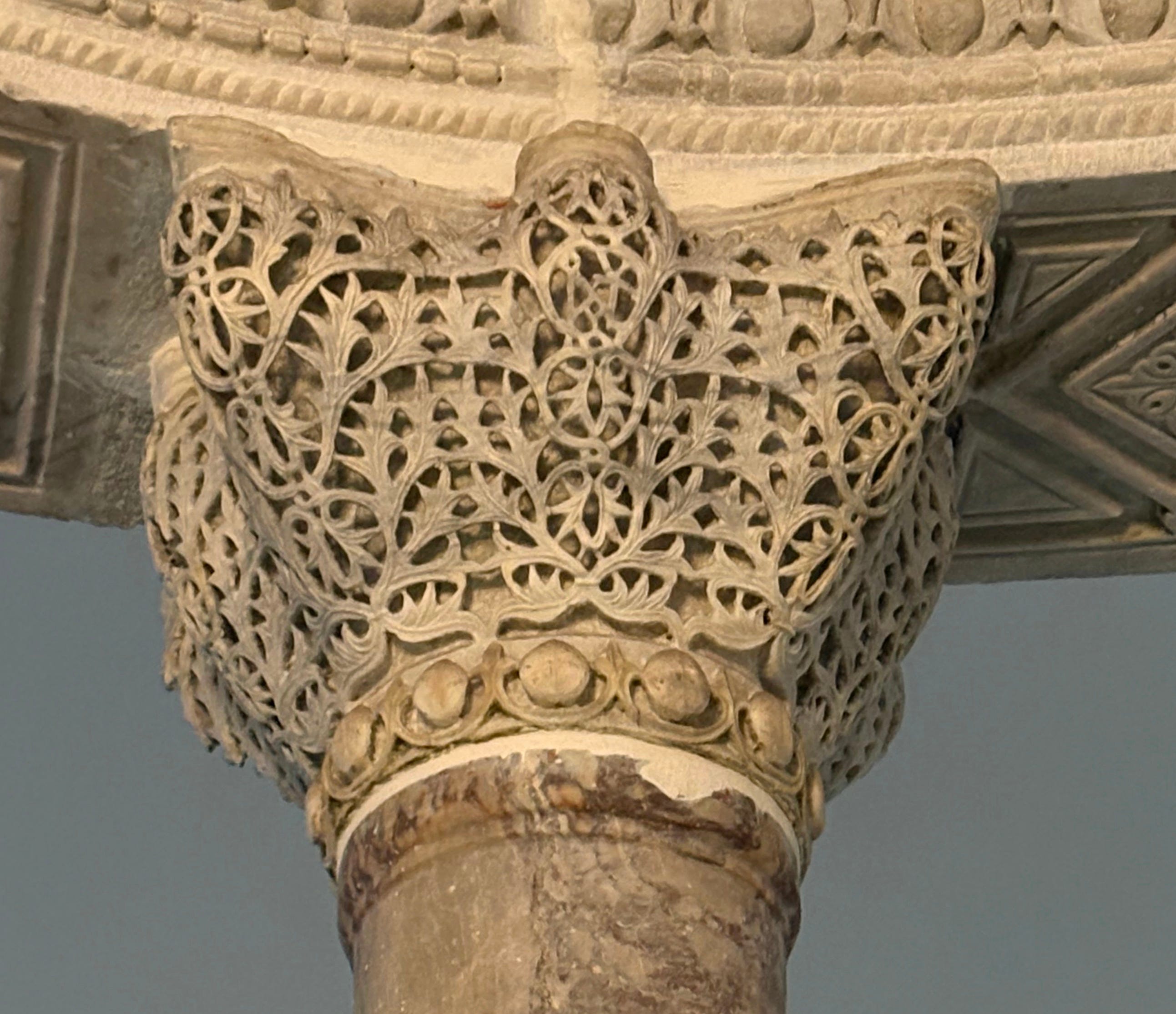
The walls are mostly painted white with floral decoration, which is all quite new. Written records say that when it was a church it would have been covered inside in different-coloured sheets of marble and mosaics. Those are gone but stone columns and their carved tops remain from the sixth century. The column tops are carved in a style known as ‘basket’ carving, because of how the artisans worked in from the outside to create a raised net of stone, with foliage patterns. These also include monograms, or complex clusters of letters, often intertwined, that could be used to spell out a name. In these cases they spell out the names of Justinian and his wife, Theodora. Around the inside rim of the domed roof is also a poetic inscription that mentions Saint Sergios (though not Bakkhos, quite unusually) and which talks about the glory of the Roman army.
Even on a grey day, the dome structure lets in light so that the building feels airy and spacious and it is easy to see why it might have seemed like a good idea worth scaling up even further.
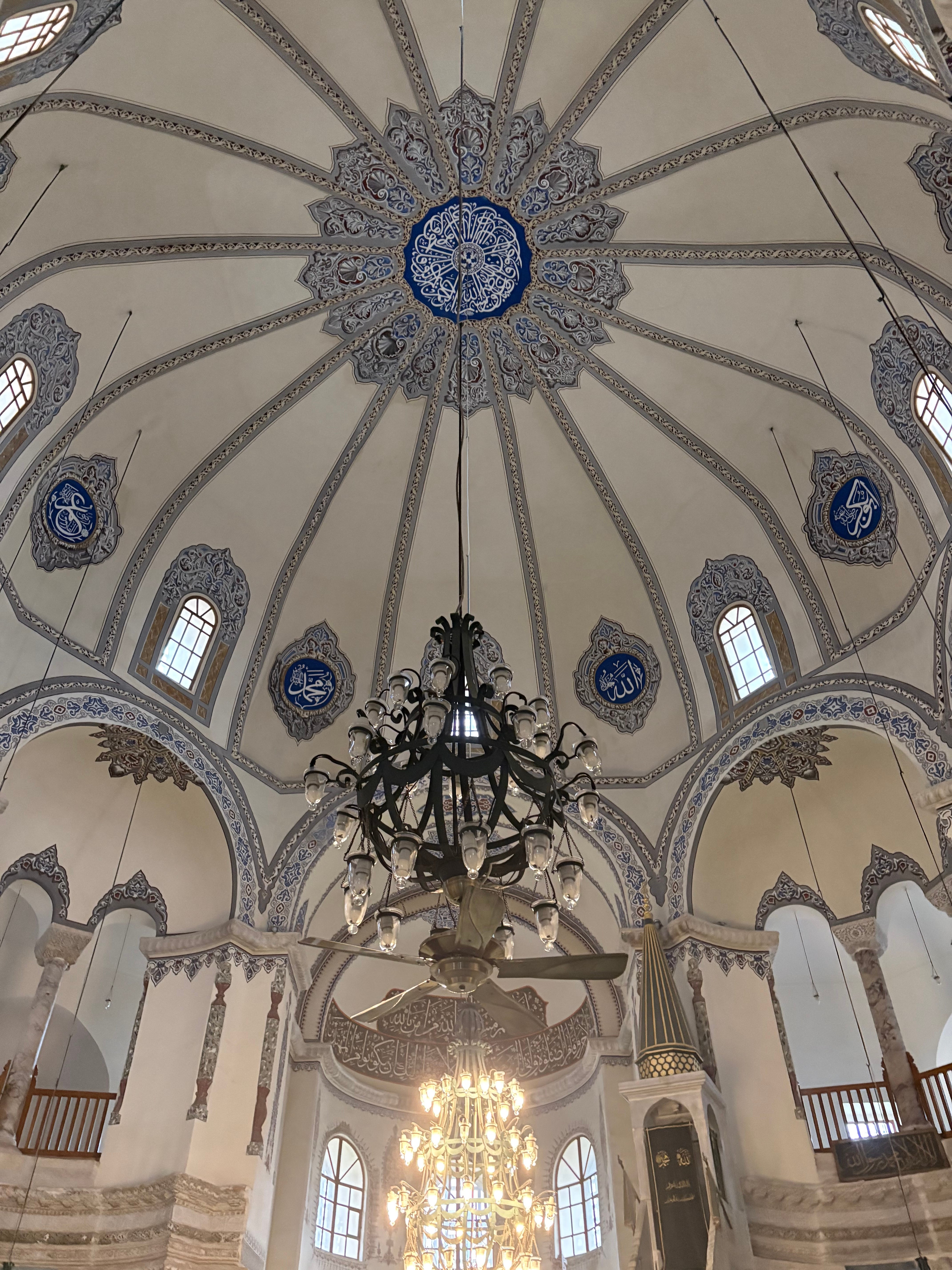
In the end, we may never know which came first: the Little Hagia Sophia looks like it probably played a part, along with other buildings, in making Justinian and his architects believe that something like the Hagia Sophia was possible. But it also seems a shame to reduce this gorgeous, peaceful building to just a step on the way to something bigger and better. For centuries it has been a centre of its own, for thought, prayer and admiration, and so it remains today.