

Clio got coffeed
Please bear with me while I dry off and meantime, here are some historical pictures!

Hello,
Happy Friday and thank you for being a subscriber to Coffee with Clio! If this is your first letter, I’m sorry. This is not business as usual. If you’ve been here a while, you know this isn’t business as usual but I’m still sorry.
You see, yesterday my love of coffee and my love of the historical muse, the wonderful Clio, coincided in exactly the wrong way. There I was, settling down at my desk with my laptop open, a fresh cup of coffee and happy hours ahead looking at Chola inscriptions from 10th-century South Asia. I dabbed on a bit of hand cream, for the chilly air of Istanbul can dry the skin. I picked up my coffee, feeling that all was well with that particular moment. I’m sure you see, as I did not, where danger might lie…
Down slipped the handle of the coffee cup through my slippery grip and everywhere went the coffee. Not a lot of it got onto my laptop but enough that I am typing this on my phone. I can’t currently type ‘p’ or ‘o’ on my computer. It is the case that, with sufficient creativity, it is viable to say quite a bit while using just letters that exclude the absent cases but… as you can see, it gets pretty convoluted pretty quickly.
So, please bear with me. I’ll be back next week with some fully alphabetically enriched historic delights but in the meantime, to brighten up your Friday and mine, here are some very cool historic things to look at!
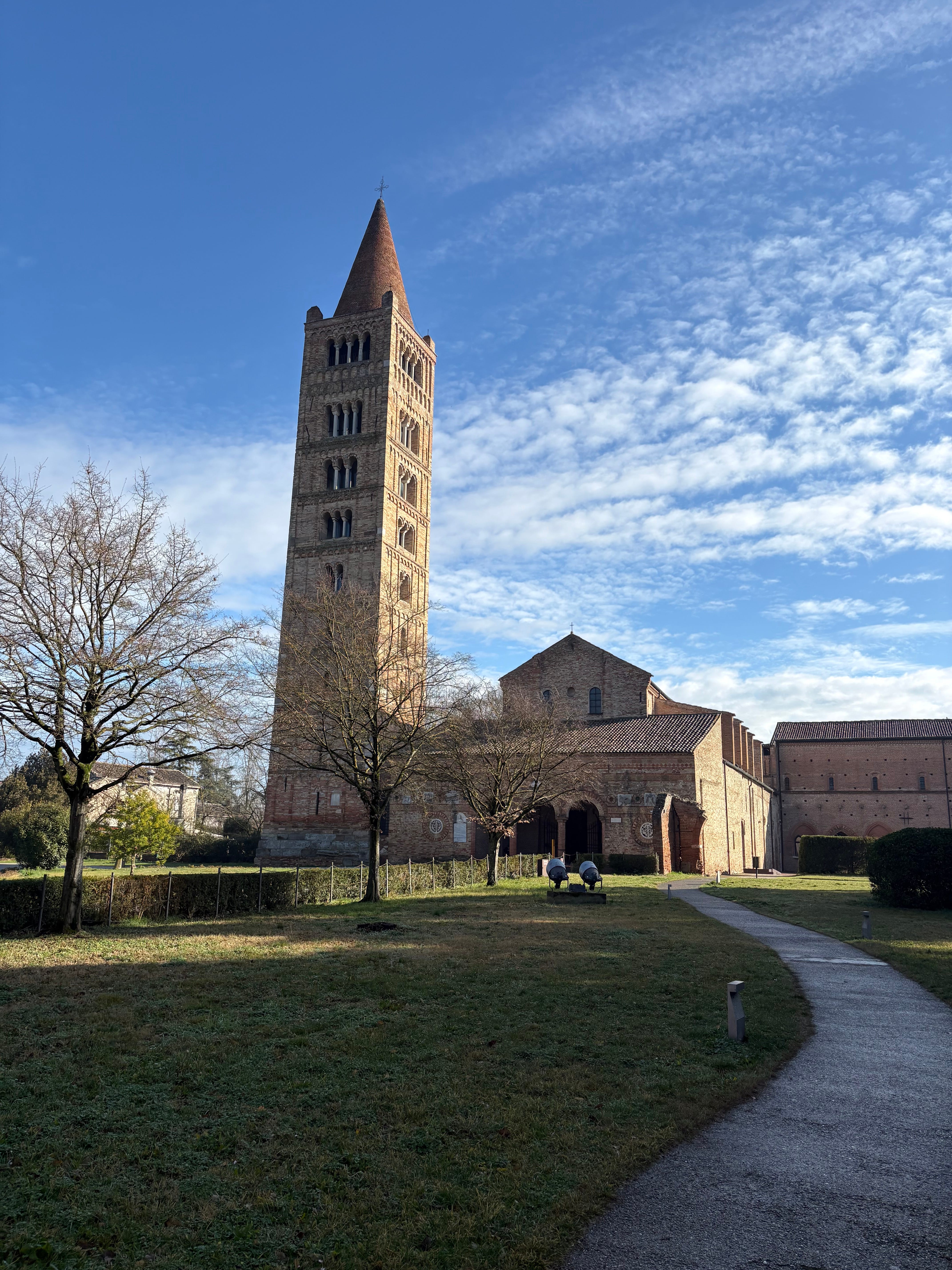
This is the abbey of Pomposa, between Venice and Ravenna, in northeastern Italy. It was built in the 6th century as a Benedictine monastic centre, though most of the standing buildings today date from the 11th century and just after. The land around it is fly for miles around, so that this would have stood out in the landscape. Abbeys like this, in the second half of the fist millennium CE across Italy became centres not just of religion but of local government as the Roman Empire shrank and lost a lot of its state capacity. Over the centuries, Pomposa became a major centre for justice, administration and music.
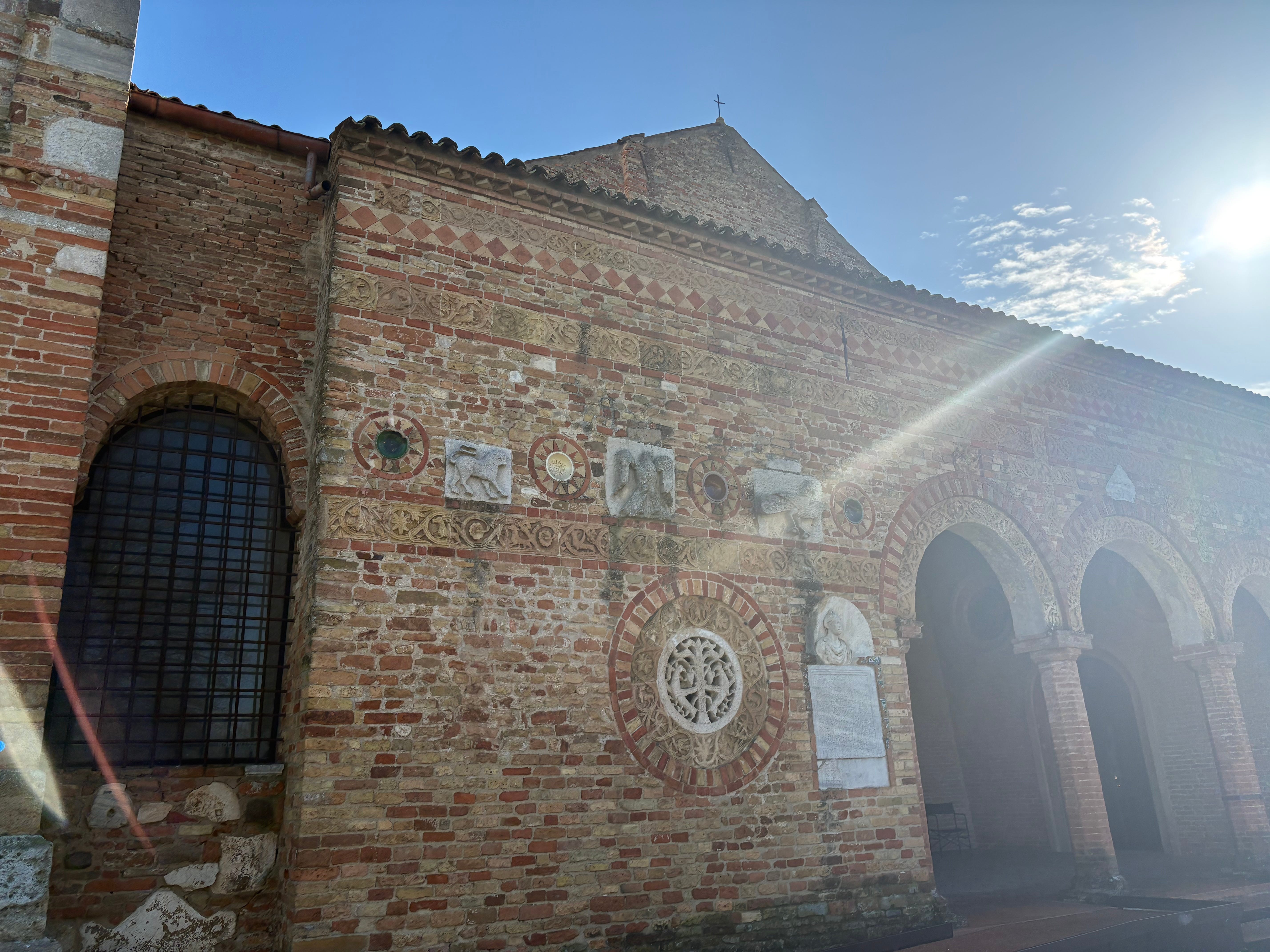
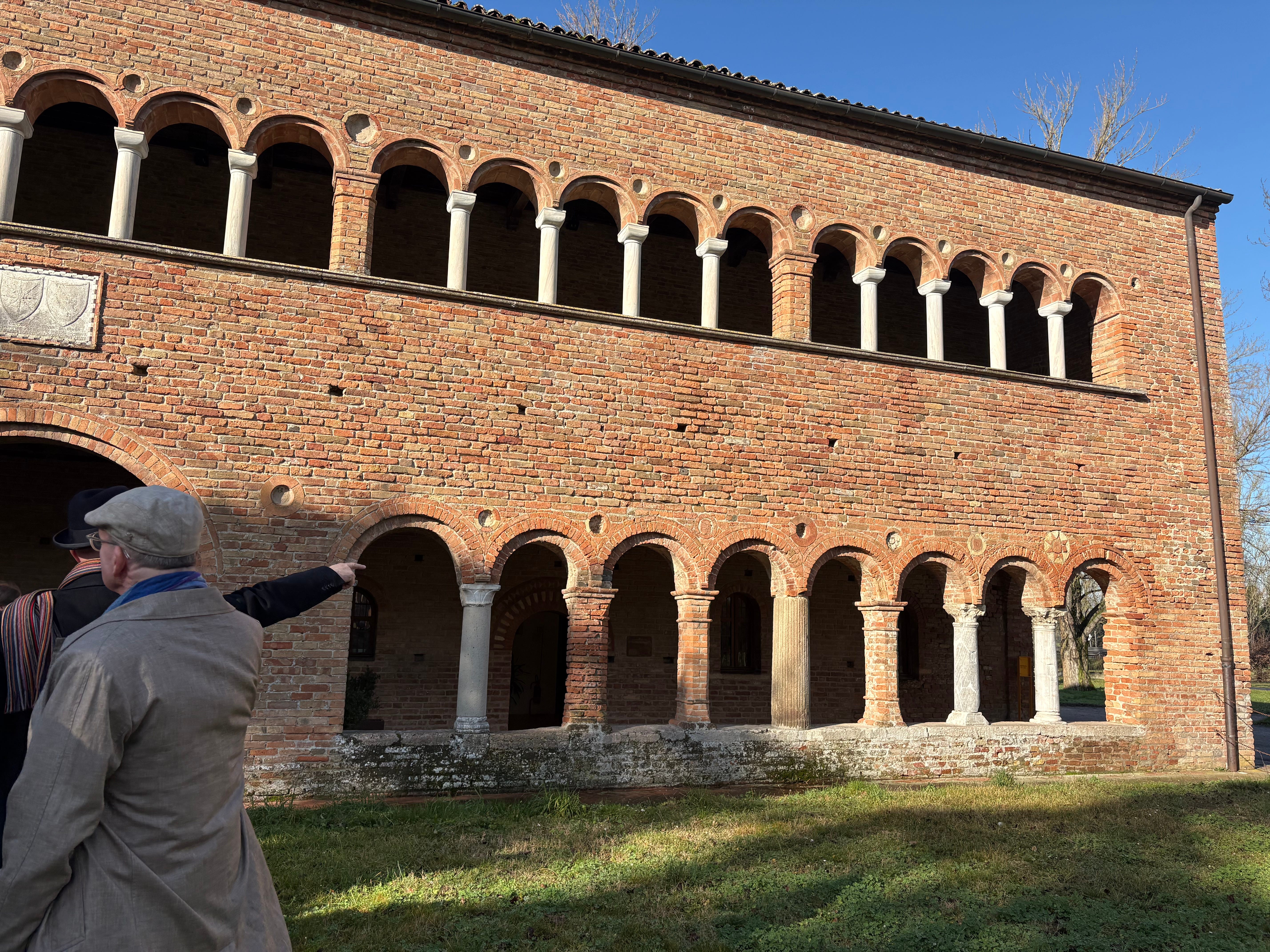
Its walls are set with older pieces of sculpture, reused from Roman buildings. From the eleventh century it also became common to set glazed ceramic bowls into the facade of buildings. There advertised connections to wider trade networks, especially with the Muslim states of the south of the Mediterranean. But they were also colourful and would have glittered in the light. You can see in the picture below where they would have been, between each of the arches (which have reused columns in them!).
Pomposa also has gorgeous wall paintings from the 12th-16th centuries, using local colours for the paints and showing how styles from the cities found their way on to rural centres like this.
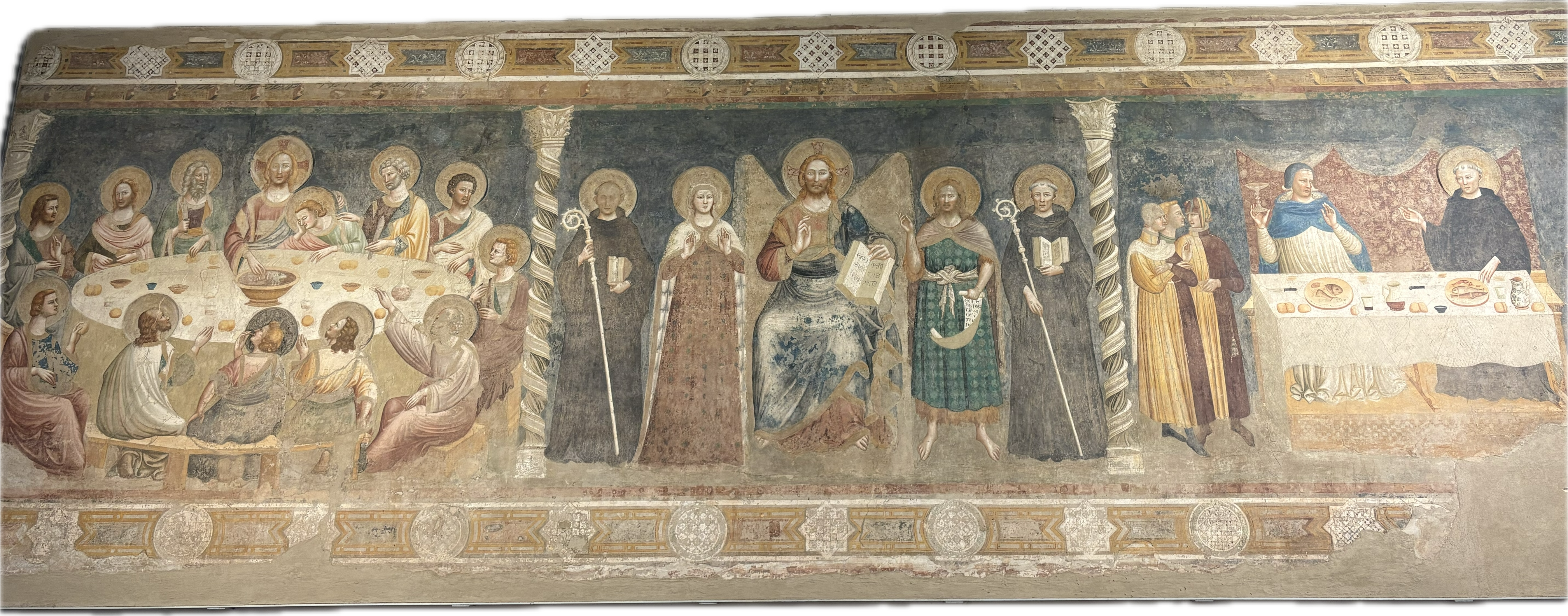
This huge wall painting covers the entire back wall of what would have been the refectory or dining room, hence the image of the Last Supper to the left. It had been painstakingly peeled away from the wall by conservators and then re-hung on a metal frame to stop damp damaging it, which is itself quite something to contemplate. This is a painting from the mid-14th century when artists were experimenting in Italy with ideas like perspective. Check out the table on the right, which is nearly but not quite at all the right angles. And the wine in the glasses is going its own way, too. But these were experiments with new techniques and an effort to think differently about space.
And I leave you with something I don’t think so I saw on previous visits to Pomposa, because it certainly surprised me! I don’t know when it is from or why it is there but on the floor of the church, I did not expect to see an elephant!
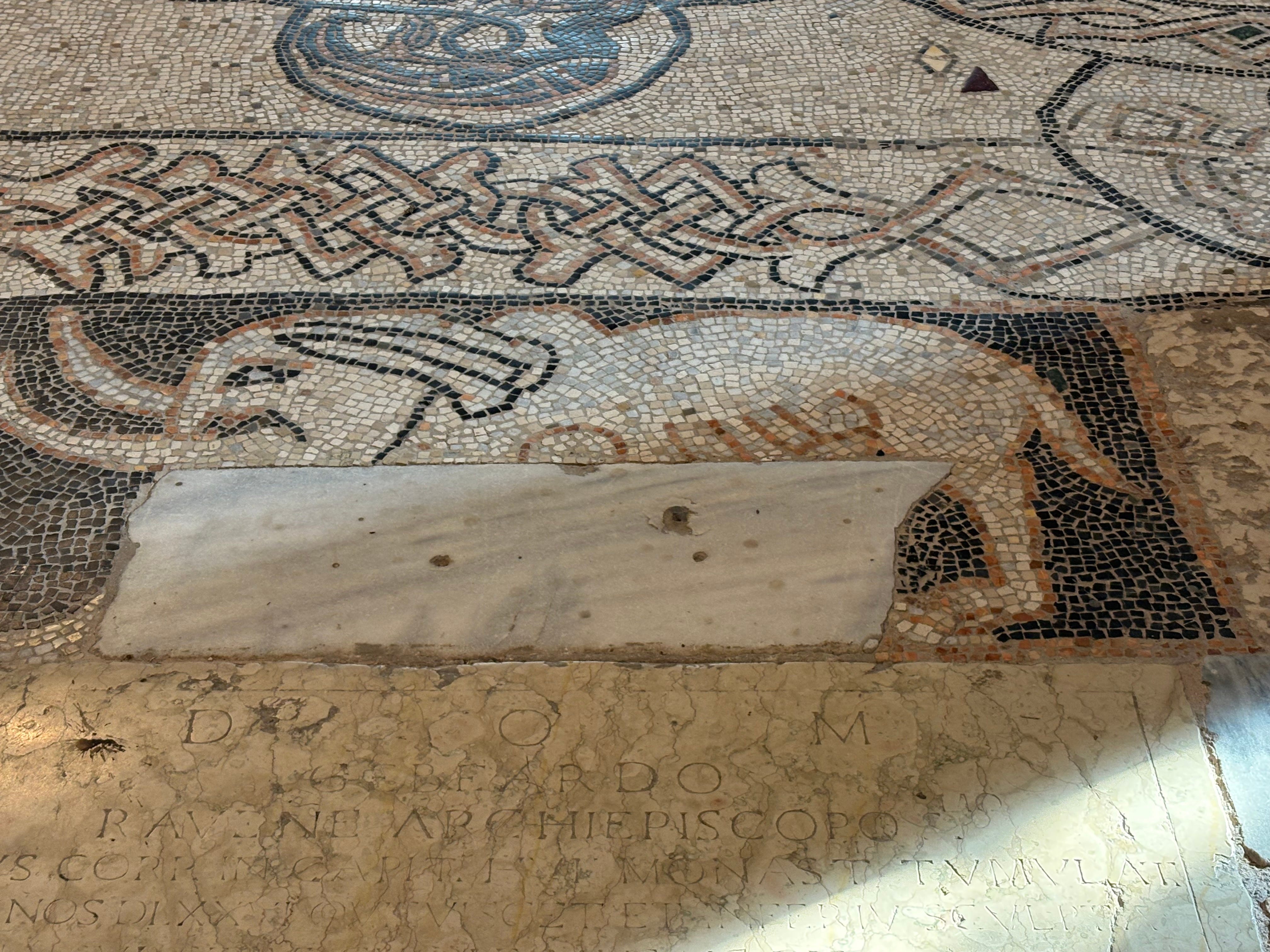
Thus, I hope diverted and a little delighted, I leave you, in this beastie’s splendid company. Forgive a picture show with less of my usual context but at least you have ps and os. And by next week, so will I!