

Taking back the narrative
Autobiography, history and the power of the story

Hello,
Happy Friday! Grab a coffee, pour yourself a tea. Pull up a chair and take a short time out of the present… Today, I want to take you on a journey of self-discovery. It’s not (just) about myself but lately I’ve been responding to the question ‘who are you?’ quite a bit. In the last month I’ve been at two conferences, one in Istanbul and one in Edinburgh, where I didn’t know most people present. I’ve also just moved countries and institutions, so I’m meeting new colleagues, neighbours and students pretty much daily. It is exciting, fun and, as with all things in the present, causes me to think more about the past!
Speculative fiction, speculative pasts
The answer to ‘who are you?’ has never been simple. One of my favourite science fiction series ever is Babylon 5. There is plenty of historical inspiration behind the scripts and it was never afraid to ask some big questions. One of the most important plot arcs, linking seasons together, pitches the main characters into a galactic struggle between two fundamental questions:
Who are you?
What do you want?
When I began studying the Middle Ages, back in the early 2000s, the question of whether medieval people had a sense of self was still knocking around lecture halls. (More on that below. Yes, they did but thinking about how we express ourselves in relation to others turned up some interesting stuff.)
Immediately before that, in my first year as a university student, when I was still studying modern languages, we read a Russian classic, We, written by Yevgeny Zamyatin in 1920-21. The irony was, Zamyatin wrote the work as science fiction and we read it as history but whatever reason takes you there, it is a beautiful, haunting story about a man in a future world where everybody lives in a selfless, communist collective - We.
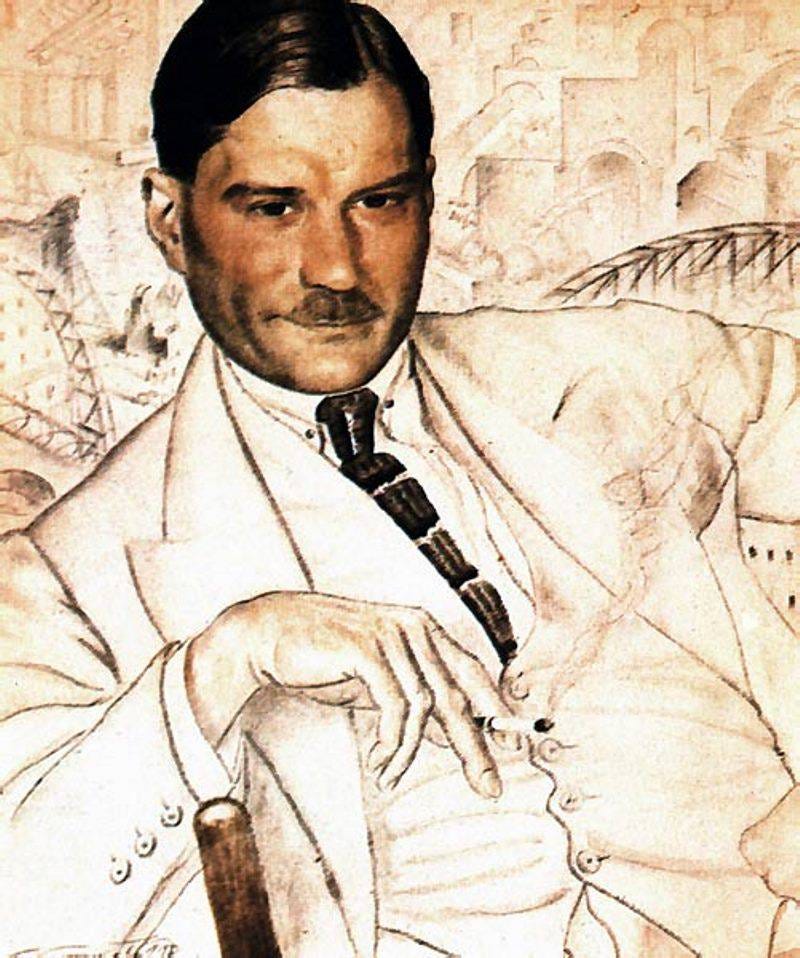
The authorities in this collective future are sending a rocket out to explore space and bring alien lifeforms into their great collective. The conceit of the story is that the novel is the narrator’s contribution to this great project, a journal that will show how peaceful and content everybody (for he is only part of We) is in this glass-walled, mass-surveilled, hyper-logical haven. Unwittingly, he begins to write his autobiography. We read it along with him. In the act of writing, in trying to describe ‘We’ from his own point of view, he ends up asking himself the question ‘who am I?’ As he tries to answer, he begins to see the oppressive horror of the world he inhabits, the force needed to compel every I to become We. The novel is considered to be one of the early works of science fiction and also one of the early examples of speculative fiction in the Soviet Union providing an outlet for criticism that could not be expressed openly. (Not that We leaves much doubt about the issues Zamyatin had with the social policies and goals around him.)
I can’t promise any answers as deep or beautifully crafted as Zamyatin’s but the question has drawn historians and archaeologists to technical inquires of our own. There was deep excitement, for example, when a Neanderthal skeleton, known as Shanidar 4, was discovered buried alongside pollen from wild flowers. There is still disagreement about whether this was accidental or the result of people intentionally putting flowers in the grave. Why did this matter so much?
Neanderthals were early humans who lived alongside Cro Magnon (believed to be our direct ancestors, though we now know, thanks to genetic sequencing in 2010, that there was genetic co-mingling with Neanderthals). Because they were assigned by early archaeologists, working with theories about ‘missing links’ and race-based hierarchies to the level of ‘lesser’ or ‘failed’ pre-humans, they have historically drawn a bit of a short straw in terms of stereotypes: they were traditionally type cast as the ultimate club-toting, raw-meat-eating, Me-Tarzan-You-Jane-ing, big, bald bubblehead that can only count to ten if he's barefoot or wearing sandals.1
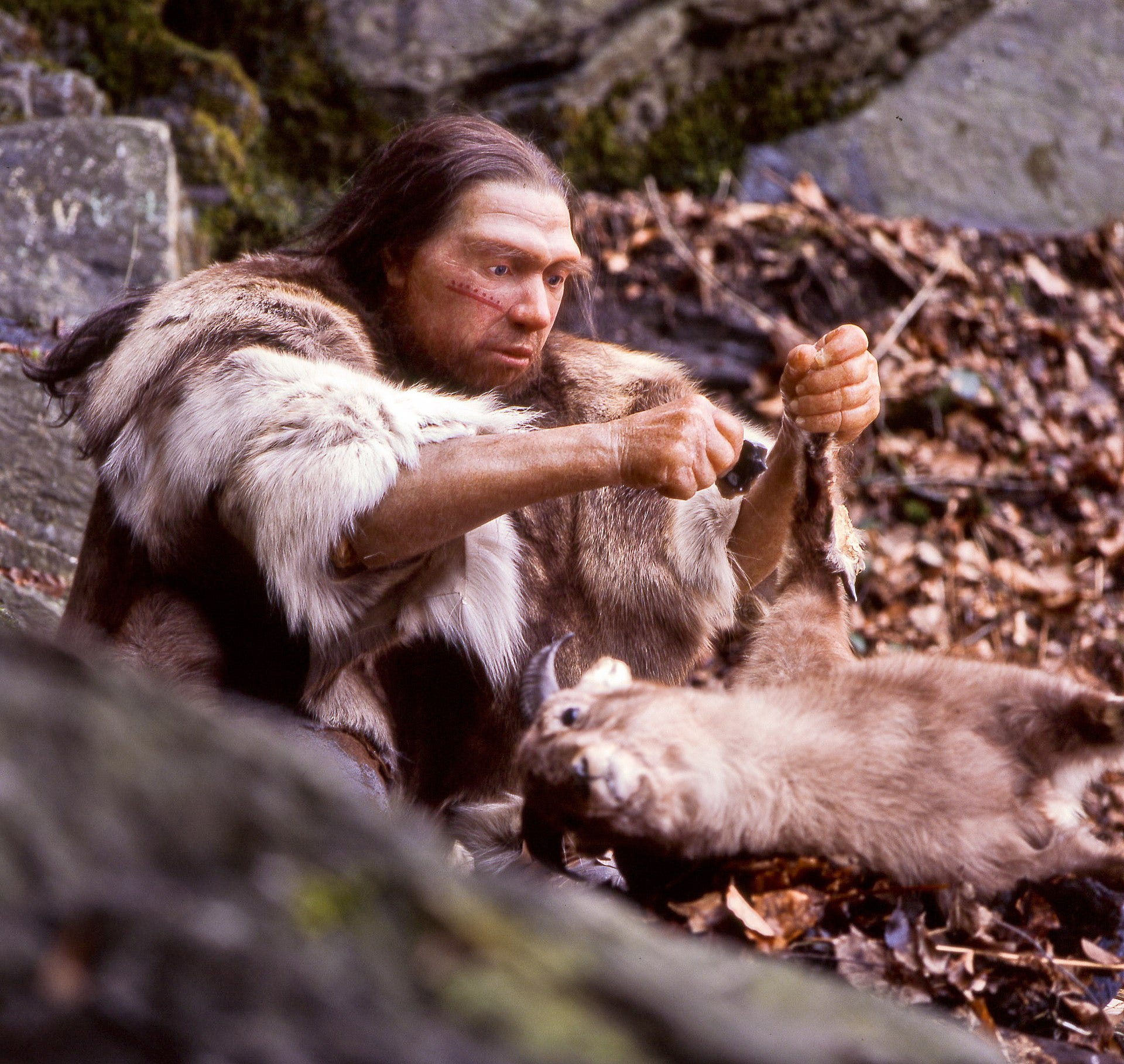
Everything we know about Neanderthal society - from what they ate to how they looked and what they might have thought or felt - comes from archaeology. The so-called ‘flower burial’ was exciting because, if a group of Neanderthals buried one of their own on a bed of picked flowers then it would show, so argued one side of the debate, something that had long been in doubt: that Neanderthals had emotions, perhaps a sense of the aesthetic or medicinal (depending on the perceived purpose of the plants). Maybe it even suggested belief in an afterlife…
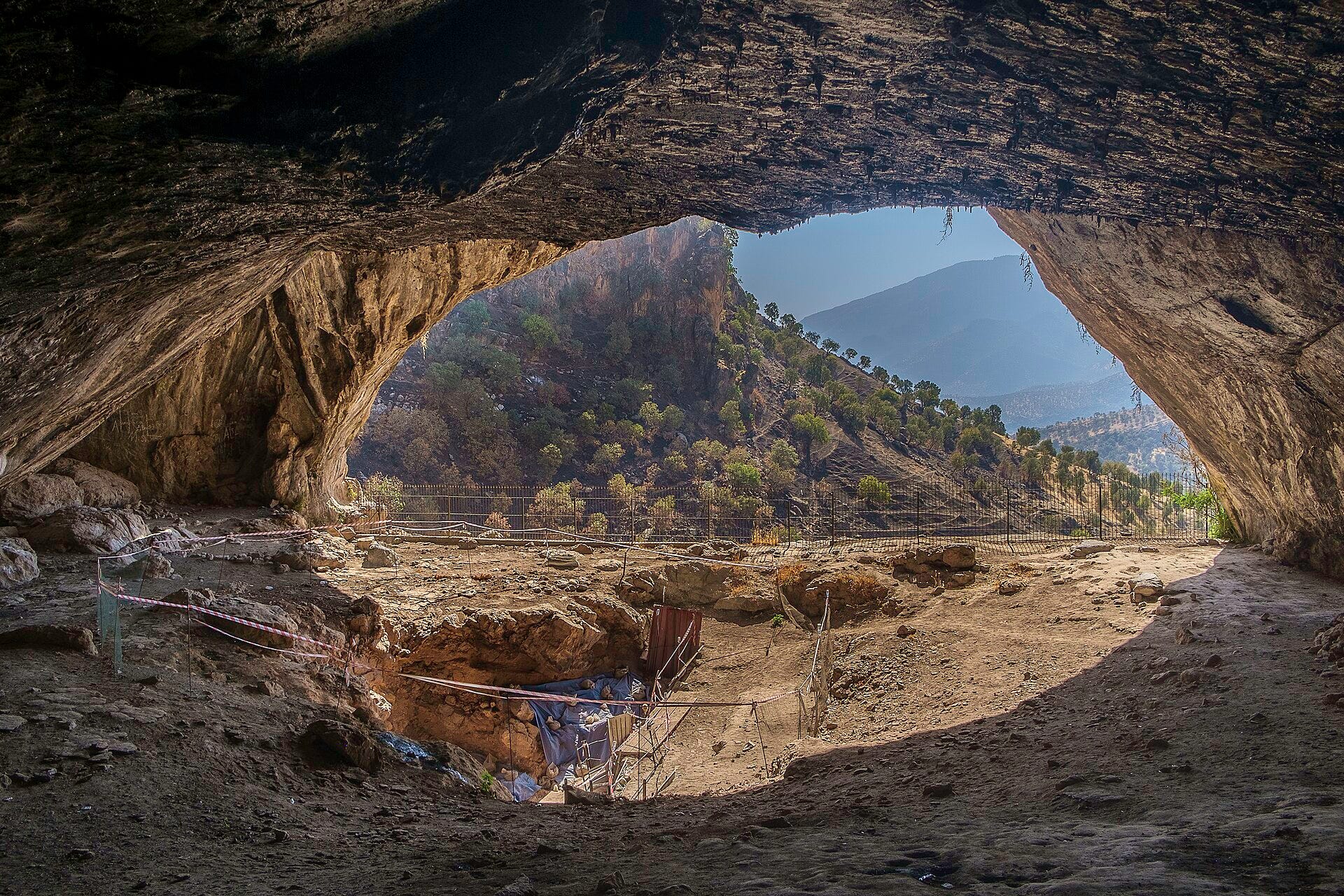
You may think that flowers in a grave, if they were put there intentionally, are being over-interpreted, that there could have been lots of reasons to put them there, or that it was stupid ever to imagine that Neanderthals didn’t have feelings. Those are all reasonable reactions and I’m not here to litigate Neanderthal cognitive capacities, though I do have more to say about neanderthals in a future post. (For what it is worth, I admire the work of people who have to work with the tiniest fragments of evidence to shine a light further back into who we are. It might sometimes mean making arguments that are a stretch but we all work with the evidence we have. Yes, there are lots of reasons why flowers might have been put in the grave, but they would all suggest interesting things. And I do think it has been a stupid, arrogant tendency in a lot of societies and cultures to think that other people and sentient beings can’t think or feel.)
But the point here is that those flowers got people excited because they raised the possibility that Neanderthals, too, 40,000 years ago, asked themselves ‘who are you?’ and therefore, presumably, ‘who am I?’ and, indeed, ‘who are you to me?’ Grief and care come from love and attachment. They are particular and personal. They are also relational: they only exist between people.
Who am I?
One reason why ‘who am I?’ has always been so difficult is because it is always about the you and the person the question is for. Whether it is asked in a conversation or a writer sits down to pen their autobiography, there is always somebody in mind to whom the answer should make some kind of sense. If you walk into a bank or a government office, the question ‘who are you?’ is expecting answers about your relationship there: I am a customer. I am a citizen. I am a foreigner. I am a clerk. The question expects an answer in terms of certain categories that are drawn from the usual reasons people are there.
Another way of thinking about this is in terms of stories. There is a usual story for why people go to a government office and that means that people have particular roles to play in the story. Some people’s role in the story is to go to work and administer things for the state. Other people’s role in the story is to need things administering and to go to the office to get these done. The big story everybody is participating in is the one where states have rules and regulations that they hire some people to manage and that everybody else has to abide by (or find ways around).
At a history conference, there is also a story that everybody knows, in which we all expect to have roles. Somebody or a group of people want to explore a particular topic or question. They invite qualified scholars to come and talk about it and discuss the issue with one another. Other interested people come along to listen and join the discussion, usually advanced students, maybe interested retired or freelance scholars. The whole thing needs some logistical support. A cast of characters is established, a set of roles that somebody expects you to choose from when they ask ‘who are you?’ It is a question (or, more often, a set of indirect or roundabout questions to get at the same information) that expects answers like ‘organiser’, ‘speaker’, ‘student’, ‘other attendee’, ‘catering’, ‘tech support’.
None of this is new or specific to either government offices or academic conferences. I’m currently reading a fascinating book, that I definitely will be reviewing here when I’m done:
Maas, Michael, The Conqueror’s Gift: Roman Ethnography and the End of Antiquity (Princeton University Press, 2025)
It explores how the ancient Greeks and Romans began to categorise people they determined to be foreign and how their understanding of what made people who they were shaped ideas for centuries afterwards. It explores how the Greeks and Romans, too, set up their expected categories. When asking ‘who are you?’ about a new group of people, there were specific things they thought mattered, and others they didn’t. How hot or cold is it where they come from? Are they warlike or not? Are they civilised (meaning, like us)? And this tradition of writing meant that when a Roman encountered a new individual who wasn’t Roman they also expected an answer in the categories they had already established: the names of specific barbarian tribes or conquered territories. All of these categories related to a bigger story the Romans especially told themselves about a world in which they were the boldest and bravest and best and everybody else was more or less like them, more or less valuable to them (as subjects, slaves or a source of plunder) and more or less dangerous to them. In this scenario, the ‘barbarians’ (as the Roman story cast them) may have had stories of their own that put the Romans in some very different roles, but since the Romans wrote the sources that survive and since at the time they usually had the most power, theirs is the story that was most significant. So it is that, even today, when trying to establish ‘who are you?’ about the writer of an ancient source or the creators of an ancient artefact or site from large parts of Europe, West Asia and North Africa in the early first millennium CE, one of the first expected answers is ‘Roman’ or ‘not Roman’.
Telling my story
This has all struck me forcefully these last few weeks, as I have suddenly found myself not quite knowing how my story fits. At the conference in Istanbul, people kept asking me if I was finishing my PhD. In Edinburgh they asked me where I was currently based. These are normal, polite, friendly questions to ask at an academic conference. They are also meant to be pretty easy ‘starters for 10’ but they weren’t. I have finished my PhD but not recently (specifically, 13 years ago). ‘Where are you based?’ is an intentionally considerate question. In a world where so many universities are laying off staff, jobs after getting a PhD are few and far between and lots of people commute huge distances (including internationally), ‘where are you based?’ gives somebody plenty of scope to answer however they like: I work here/I’m studying there/I live in such-and-such a place. The assumption behind the question - the story - is that everybody has a place where they are based, whatever that might mean. Except that I didn’t. The Edinburgh conference fell precisely in the two-week window when I wasn’t based anywhere. (Well, except, out of a suitcase in my best friend’s spare room!). I had finished one job in Istanbul and hadn’t yet started my new on in India. And I didn’t want to bore everybody who asked what was meant to be a simple question with a long, explanatory story, but there wasn’t an easier answer.
Worse, in the scramble of moving, I realised that I didn’t have my story straight and when you don’t have a good, whole story to fit yourself into, those short-form answers don’t come so easily. I could see people asking roundabout questions or not asking obvious questions that showed they were putting their own stories together. Had I been made redundant? Had there been some sort of… scandal? When people learned I wasn’t a PhD student but a mid-career scholar, what was I doing in Istanbul? For various reasons, the fellowships there mostly attract people close to their PhD or fairly close to retirement. In Edinburgh, if I wasn’t ‘based’ anywhere, but lots of people there knew I had been at Leeds or, before that, in London, then what had happened?2 In fairness, I probably gave this a lot more thought than they did but it got me thinking about why people, throughout history, have chosen to write autobiographies. Why and when do people decide that it is important to take control of their own narrative?
Telling their story
I don’t have nearly enough space, time or expertise to answer that question but telling their story is something that people have done for a really long time. ‘Autobiography’ - the act of intentionally declaring the intent and then following it through of telling ‘your’ story - is quite common but so is people letting us know who they are while they are technically writing about something or someone else. Roman emperors wrote about their philosophy of life (Marcus Aurelius, 121-180 CE), their victorious campaigning far from Rome (Julius Caesar, 100-44 BCE) or how frustrated they were with the people of the city of Antioch (Julian ‘the Apostate’, 331-363 CE). In the early Christian tradition, Augustine of Hippo (354-440 CE) and Saint Patrick (5th-6th century CE) both wrote about their own journeys from unbelief to belief in Christ. The Frankish courtier, Einhard (c. 775-840 CE) wrote a biography of the emperor Charlemagne but at the beginning of it, he explained why he was qualified to do so and, in the process, told much of his own life story.
In the 3rd c. CE, the Zoroastrian emperor Shapur had his great deeds carved into stone in what is now modern Iran. So did Chola emperors in 10th-12th century south India. In the 10th century in Japan, in a rare departure from the norm elsewhere, it became fashionable for rich women to write their autobiographies.
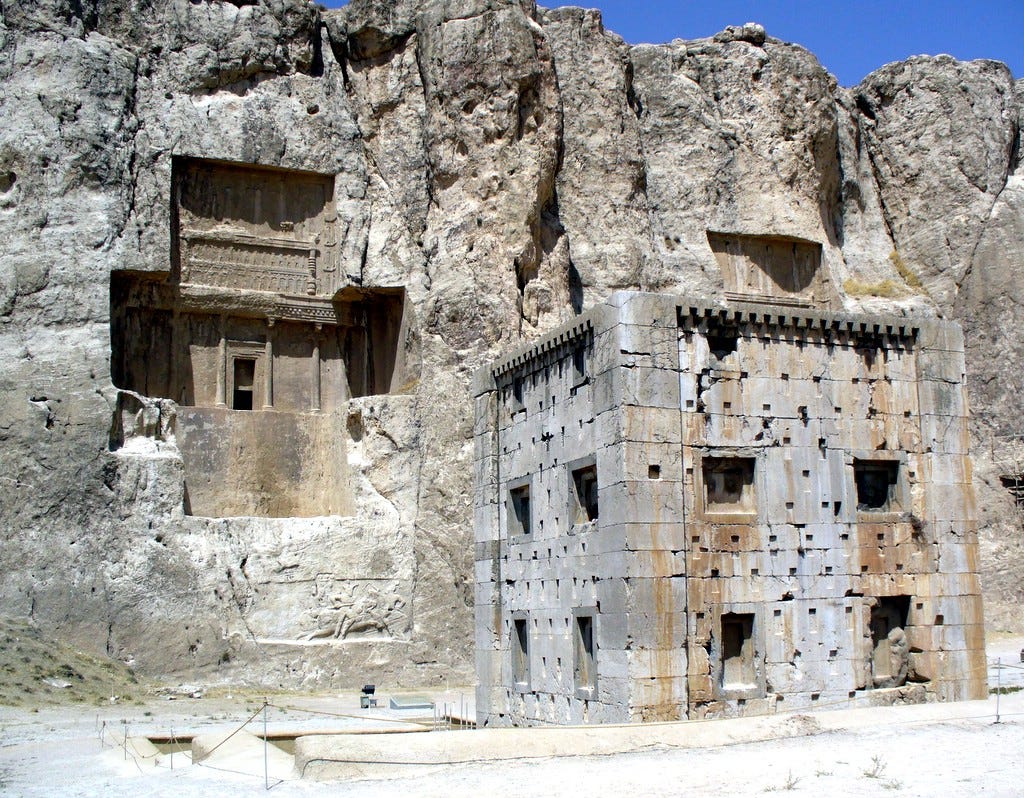
All of these autobiographies might fall into the category of telling tales of glory: they were people magnifying achievements, or in Einhard’s case, connections, in real life by turning them into stories that could be shared, repeated and preserved. In the process, they were also able to streamline the narrative, focussing on the most glorious and the most memorable elements.
Another category is perhaps the disaster narrative. One of the most famous autobiographies of the Middle Ages was written by a philandering scholastic-turned-monk by the name of Abelard. Abelard and Eloise have become synonymous in some circles with romance, akin to Romeo and Juliet, though the story in its sordid details is about in a par with overwrought teen suicide as rom-com fodder goes. Abelard tells us that he was a brilliant but antagonistic celebrity scholar in the 11th-12th centuries. He was hired by a man to tutor his young, female and intellectually briliant ward, Eloise. Abelard, much older and overcome with lust, by his own admission, groomed her with alternating praise and beatings. Ups and downs followed, including a child. She apparently refused to marry him so as not to destroy Abelard’s wonderful career, and eventually her family kidnapped and castrated him. Eloise went on to become abbess of her own convent. Abelard joined a monastery and left us his aptly titled ‘The History of My Calamities’.
If Abelard stands out as one of a kind, he was certainly not the only medieval writer to document her troubles and travails. In 15th-century England, Margery Kempe asked for her account of her travels to be taken as dictation. She told of her unhappy marriage (that produced at least 14 children) and then her decision to go on pilgrimage to the Holy Land, a journey accompanied by bad luck, abandonment by travel companions and lots of weeping. In fairness, she also seems to have been a one-off and, like ‘The History of My Calamities’, ‘The Book of Margery Kempe’ has attracted volumes of scholarship for what it tells us about the world in which she lived but also about how she didn’t conform to it.
We are all each other’s story
That seems to be a theme that runs through autobiography: whether it is glory or suffering, people seem to have decided to tell their story when it didn’t quite fit the collective stories in which they lived. It is tempting to imagine the effort coming out of a thousand moments of being asked, one way or another, ‘who are you?’ and realising that none of the expected ‘parts’ fitted. ‘Emperor’, sure, in some of our cases, but these were all men who wanted people to know that this wasn’t… enough. They weren’t just ‘playing emperor’ in the latest iteration of the big story in which empires have emperors who rule over them and who people obey. They were men with names and deeds, who had taken that role and done something with it that you wouldn’t be able to guess just from knowing their title.
For Abelard, the answer ‘monk’ seems to have fitted equally poorly. His autobiography wants you to know that he isn’t just some guy in a habit who maybe copies manuscripts and doesn’t have sex (has maybe never had sex). Though full of calamity, and maybe even remorse, his story is also full of details that yell ‘yes, I’m a monk but you have to understand, there’s so much more!’ I don’t have sex now because I can’t, not just because I’m celibate like all the other monks, and before that I had so much fantastic sex with my brilliant young lover. And I don’t just write manuscripts because that’s what monks do. I' write manuscripts so brilliant that I’ve been driven out of schools and communities across France for it!
For Margery, the categories of ‘woman’ and ‘wife’ and ‘mother’ seem not just to have been inadequate but almost repellent. They were all the ones the world she lived in had given her: she was illiterate. She was not a queen or a princess. There weren’t other roles available to her in the big story of living in 15th-century King’s Lynn (then Bishop’s Lynn). But they didn’t fit. ‘Who are you?’ didn’t have room in that story for ‘a woman who speaks to Christ and sees visions of the Virgin’.
All of these people, though, needed to find a way to explain their answer in terms that could be fitted into the bigger stories. Even if the answer was not one of the expected ones, it had to make some kind of sense. And that brings us back to those lectures when I was an undergraduate about whether people in the Middle Ages (in Europe) had a sense of self. They did, but a scholar called Colin Morris in the 1970s pointed to something quite interesting about how they expressed it.3 They tended, he argued, to position themselves in relation to other people: ‘who are you?’ A: ‘I come from this town’, or ‘I am the father/mother/brother of somebody else’ or even ‘I am a Christian’.
Over the course of the 11th-16th centuries, Morris argued, people became more likely to talk about things that were intrinsic to them. I, for example, am a historian. I am a university lecturer. I am a runner. There is something in this and it has been observed in other contexts, too. How people are expected to answer the question, ‘who are you?’ tells us a lot about how different societies see themselves collectively. And yet, it also doesn’t feel quite right to me either. What my conferences showed me is that all of our answers are relational, even if we make that more or less obvious in different times and places. I am a historian, but that doesn’t mean anything without other people who know what history is, who are interested in finding out more about it, or who recognise expertise in uncovering it. I am a university lecturer: it sounds like a job title but it is really a community statement - I am somebody who works with other scholars and who teaches students. I am a runner. That one might be about as independent as it gets but if there weren’t thousands (maybe millions) of other people all over the world who also run for fun, it wouldn’t mean anything to say ‘I’m a runner’. It would be as weird as saying ‘I’m a person who folds my bathroom towels from right to left’ or ‘I’m a person who really likes coconut’. These are fine things to be but they aren’t good answers to the question ‘who are you?’ because they don’t mean anything to anybody else.
This (from ‘club-toting’) is a quote from the 1993 Disney movie, ‘Cool Runnings’ about the first Jamaican bobsled team. In fact, traditional views of Neanderthals would deny that they could count or speak, so no Me-Tarzan-You-Jane-ing either, and they didn’t wear sandals. They lived in the tail end of the last Ice Age, so it would have been leather and fur foot wraps, thank you very much. They are usually also depicted with shaggy, ungroomed hair or, in museums worldwide, really bad nylon wigs.
For avoidance of needless obfuscation, I left Birkbeck because I was commuting from Yorkshire to London and although I loved my students and colleagues there and the values of the organisation, the journey and the costs associated with it were too much for me. And I left Leeds because I found that I wasn’t able to pursue my research and teaching goals there and a chance came along to do something really amazing and come and work at Krea!
Morris, Colin, Tne Discovery of the Individual, 1050-1200, Church History Outlines, 5 (Society for the Promotion of Christian Knowledge, 1972)
"Over the course of the 11th-16th centuries, Morris argued, people became more likely to talk about things that were intrinsic to them." It would be interesting to know why & how that happened. & was it also an attribute of Romans & Greeks -- to identify themselves by intrinsic qualities, or by a collective, like family? I always thought that Germanic tribes were more individualized even then (Roman & Western European medieval period) but do we know?