

Why fun is a serious problem
with a little help from my big-mouth bear buddies!

Hello!
I hope you are well wherever you are. It is Spring here in Türkiye and the sunshine is very cheering. But I want to talk to you today about a rainy afternoon that I spent in a museum.
Specifically, I spent it in the Museum of Anatolian Civilizations in Ankara. It is a gorgeous museum, with the artefacts arranged inside an Ottoman-period (15th-20th c.) warehouse, located just outside Ankara Castle (which I wrote a bit about here). For added surprise and delight I happened to be there at the same time as a free public performance by a group of operatic singers. I prize the random, absurd and beautiful and sitting in the middle of a room of Hittite sculpture (more on that in another post), listening to a trio of Turkish singers perform an Italian song about funiculars (you can listen to Luciano Pavarotti performing said song here) definitely counts as all three!
The museum collection is arranged around a central gallery of stone sculpture, mostly from the first millennium BCE, a basement gallery of Roman and later medieval artefacts (so, roughly, the first millennium CE), and a U-shaped main gallery that leads the visitor through a series of sites that take us from roughly 9000 years ago (the Neolithic site of Çatahöyük) to the late Bronze Age, around 1800 BCE.
The range and quality of finds is amazing. The displays are clear and well-labelled. In short, if you are in Ankara, go and see it. If you are wondering about places to go, consider Ankara! So what follows is not a criticism of the Museum of Anatolian Civilizations. It is a reflection on a more general issue. In fact, I was talking about it with two archaeologist friends only a few weeks ago, and here it was, staring me in the face. The issue is… fun.
Big-mouth bear buddies!
These little cuties were made in the Bronze Age, so around 4000-5000 years ago.
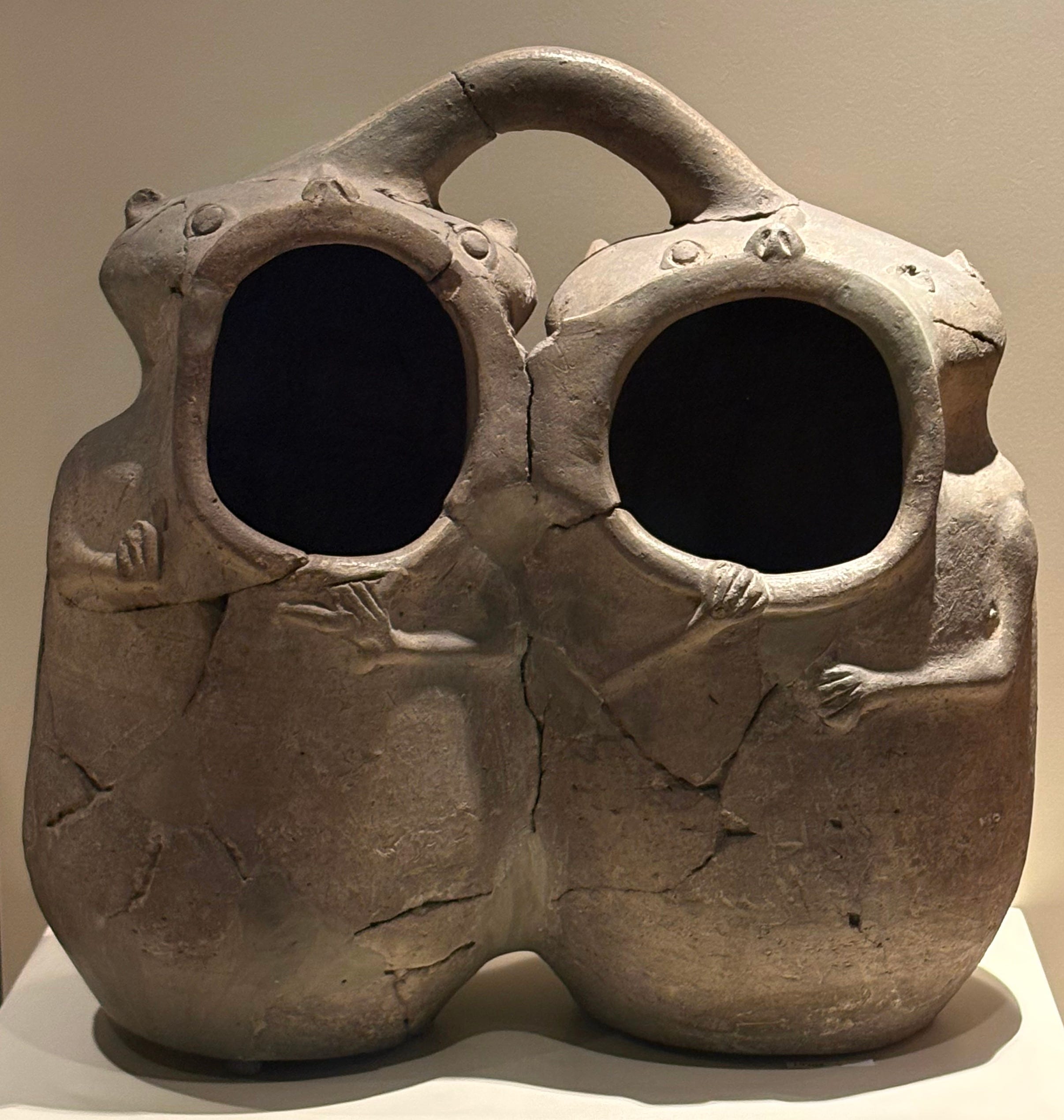
I looked eagerly for the caption. It was easy to find (as I said, this is a lovely museum in terms of useability!). It said ‘terracotta box’. Okay… But surely, at least, ‘terracotta box depicting animal figures with distended mouths’? Or, better still, what about ‘Big-mouth bear-buddy box, made of terracotta’? Look at those sweet little rounded ears, the up-turned little bear noses! And what about those adorable, slightly anthropomorphic (human-like) hands? One of them is actually holding its massive mouth open! There’s a handle over the top, so this looks like something made to be carried around.
What was it for? Who knows! I understand the reluctance to speculate. Maybe ‘terracotta box’ really is the safest way to go. It is made of terracotta. It was clearly intended to put things in, and is thus, a box. Museums captions and academic publications can sometimes seem dry because their first duty is not to say things that are untrue: they should be places where you can find accurate information, and accurate information means being very clear about what is fact (terracotta box), what is subjective observation (big-mouthed bear buddies!) and what is speculation (which is mostly avoided). But one of the things I love about writing here is that I have a little bit more space, as long as I’m obvious about it, to speculate.
My mind was doing cartwheels. I couldn’t see whether the box is divided internally so that one mouth leads to one section and the other mouth to another, but whatever way I look at it, this looks like the point is putting things into and getting them out of the two different mouths.
Is it a throwing game? Do you throw things (balls, knuckle bones?) and get different points depending on which one it goes into?
Is it a drinking game? Maybe you put the liquid into the mouth that the bear is holding open and take it out of the other one, which seems to be pointing up (at you? At the person serving?).
Is it a vending/dispensing gimmick? Just like the drinking game option, I’m thinking somebody selling or serving beer or honey water or whatever was good in Bronze Age Anatolia: you point into the righthand bear mouth, s/he dispenses out of the lefthand bear mouth.
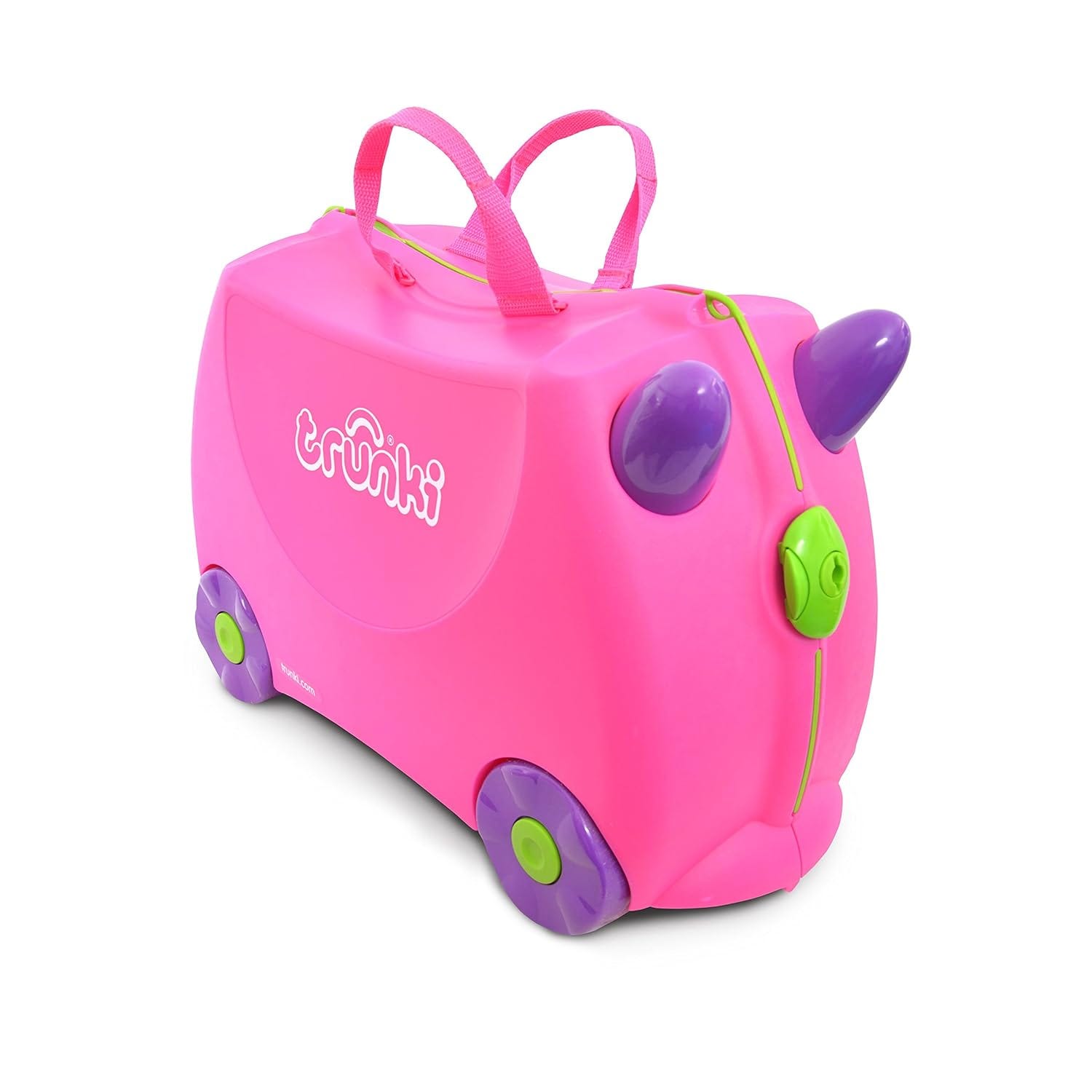
Is it for children? A fun way to get them to tidy up their junk (balls, knuckle bones, etc.) and even carry it around with them when you go next door to aunty and uncle’s place, like a little Bronze Age Trunki (TM)…
Any other ideas? Let me know in comments! One thing seems certain to me: these guys are meant to be fun! They’re funny. Yes, I know that things like cuteness, beauty and humour are culturally subjective. Yes, I know that Bronze Age Anatolia was very different from the world of today. But people were still people. I’ve written about this here before. We are basically the same, biologically, as the people who made big-mouth bear buddies. We live the same bodily reality, starting small and helpless, needing food and water, wanting social connections, and tasting and smelling and touching and seeing things and having preferences about things. It has been suggested that all humans like cuddly, round shaped things with over-sized facial features, in comparison to average adult proportions, because they remind us of infants and inspire feelings of care and protection: some kinds of cute might be hardwired.
The lost laughter of the deep past
People in the past - even the very deep past - were capable of liking or disliking things. They expressed themselves by making and drawing, and in ways we cannot recover archaeologically, like talking and (almost certainly) singing and dancing. And there is no plausible reason not to think they laughed. Every human society ever recorded laughs. Chimpanzees laugh. And another thing we can be even surer they did was play. Again, every human society for which we have evidence plays. Chimpanzees play. Cats and dogs play. Rats play. Dolphins play. I’m not a zoologist. Maybe not every mammal plays. But people definitely do!
But when was the last time you saw modern depictions of pre-historic people laughing? Over the years I’ve seen many dioramas in many museums, as well as watercolour reconstructions and video re-imaginings: prehistoric people knapping flint, smelting bronze, skinning deer, burying their dead, or just sitting around a fire looking contemplative (and a bit unshaven and dirty but that is another set of stereotypes to dismantle some other time). Apparently, not one of these scenes involved anybody laughing. Granted, the funeral scene is probably fair, but surely somebody sat around those fires telling hilarious stories about that antelope that his brother over there thought was a bear! Children splashed around in mud and threw things and did that little bum-waggle thing right after they learned to stand that parents insist is ‘dancing’ whether there’s music playing or not. And people laughed at them and smiled.
By the time we get to periods with written language, laugher and fun are undeniable. Epic poems are full of jokes. Plays and dramas feature clowns and comics. It turns out that people laughed about most of the same things we do today (double meanings, pratfalls, misunderstandings, elicit romance) as well as things we don’t necessarily (the Romans thought hernias were hilarious, presumably unless they had one). And, of course, the existence of poems, plays and dramas tells us that people were willing to invest quite a lot of their time and effort into entertaining each other and being entertained. None of this is very surprising.
Yet, the moment we step outside those pools of literary illumination - those views right into what people were thinking and saying - we (people who study and write about the past) tend to retreat into a weird earnestness. Even in societies with writing, when it comes to aspects of life that they didn’t write about, we often do the same. We know from Greek literature that there were fun, games, jokes and entertainment in the ancient Mediterranean, but when archaeologists find things like little horses or chariots or terracotta animals, the most common explanation is ‘votive offering’, in other words, something offered at a temple (or perhaps in a grave) as a gift to the Gods or the ancestors or as a request for help (e.g. with winning a war or curing a sick horse).
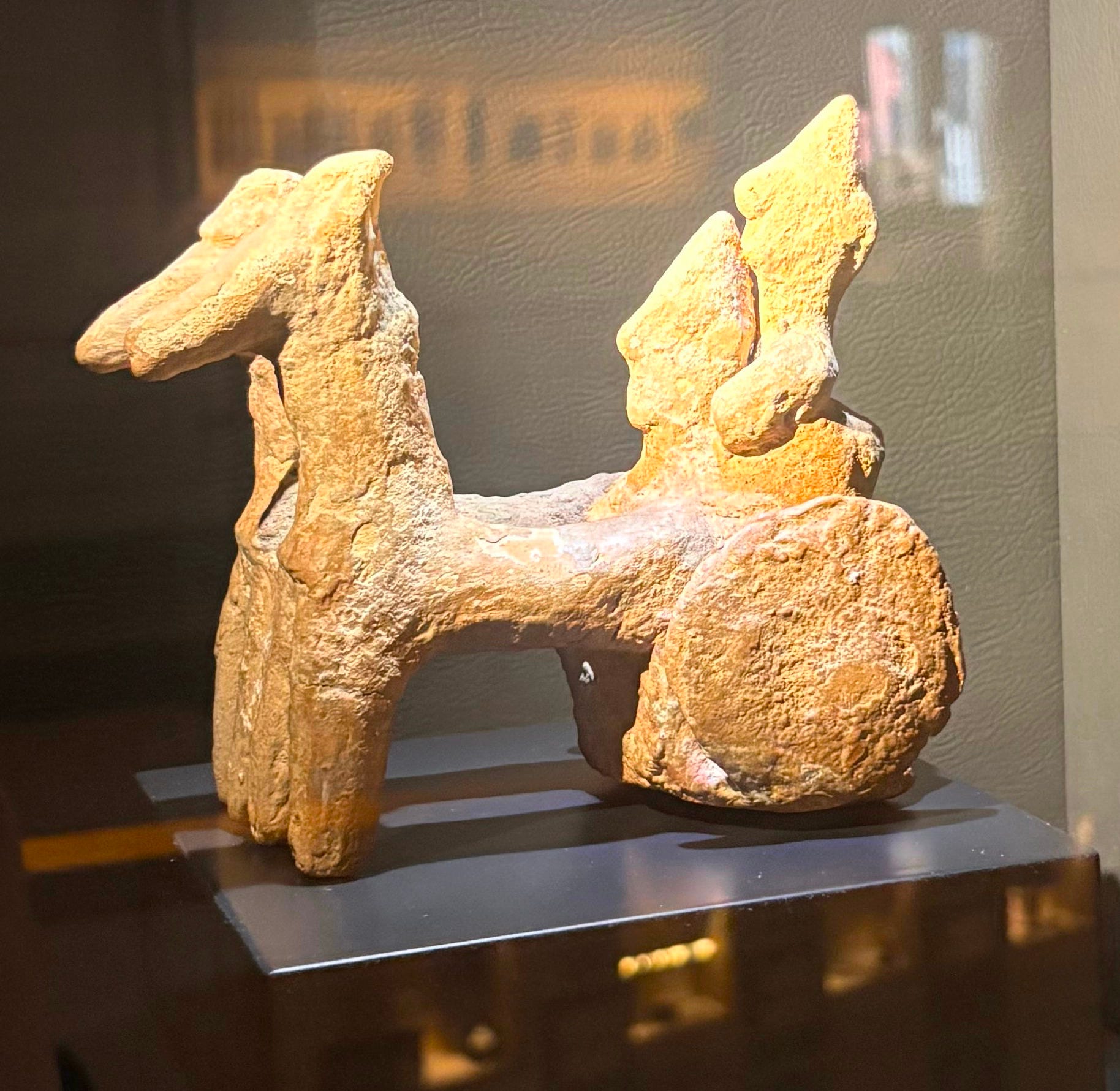
Yes, sometimes these things are found in graves. Sometimes they are found in temples in large numbers and ritual makes sense as an explanation. But very often they are found in houses or just lying around on archaeological sites. And what that makes me think isn’t votive offering. It’s my niece and nephew and the question that follows them around their little lives, like it does every other toddler I know: are you going to put your toys away? (No, obviously!)
A tiny toy revolution…
I am generalising, but the insistence on labelling minitature things or funny-looking things ‘votive offerings’ or ‘models’ is common enough that archaeologists joke about it in the pub: why can’t these things be toys?! Seriously. We know they had kids. We know that kids play.
But while it is common, it isn’t universal. Over the last 30-40 years there as been a tiny revolution in the study of children, childhood and play.1 This doesn’t mean reclassifying everything as toys. How societies understand children and childhood varies a lot. People did and do produce things that are offerings or votives. Instead, the revolution has been in opening up the possibility of play. There has also been a growing interest in adult play, from board games to dressing-up or sports rituals that might have had a spiritual function but were also a lot of fun.
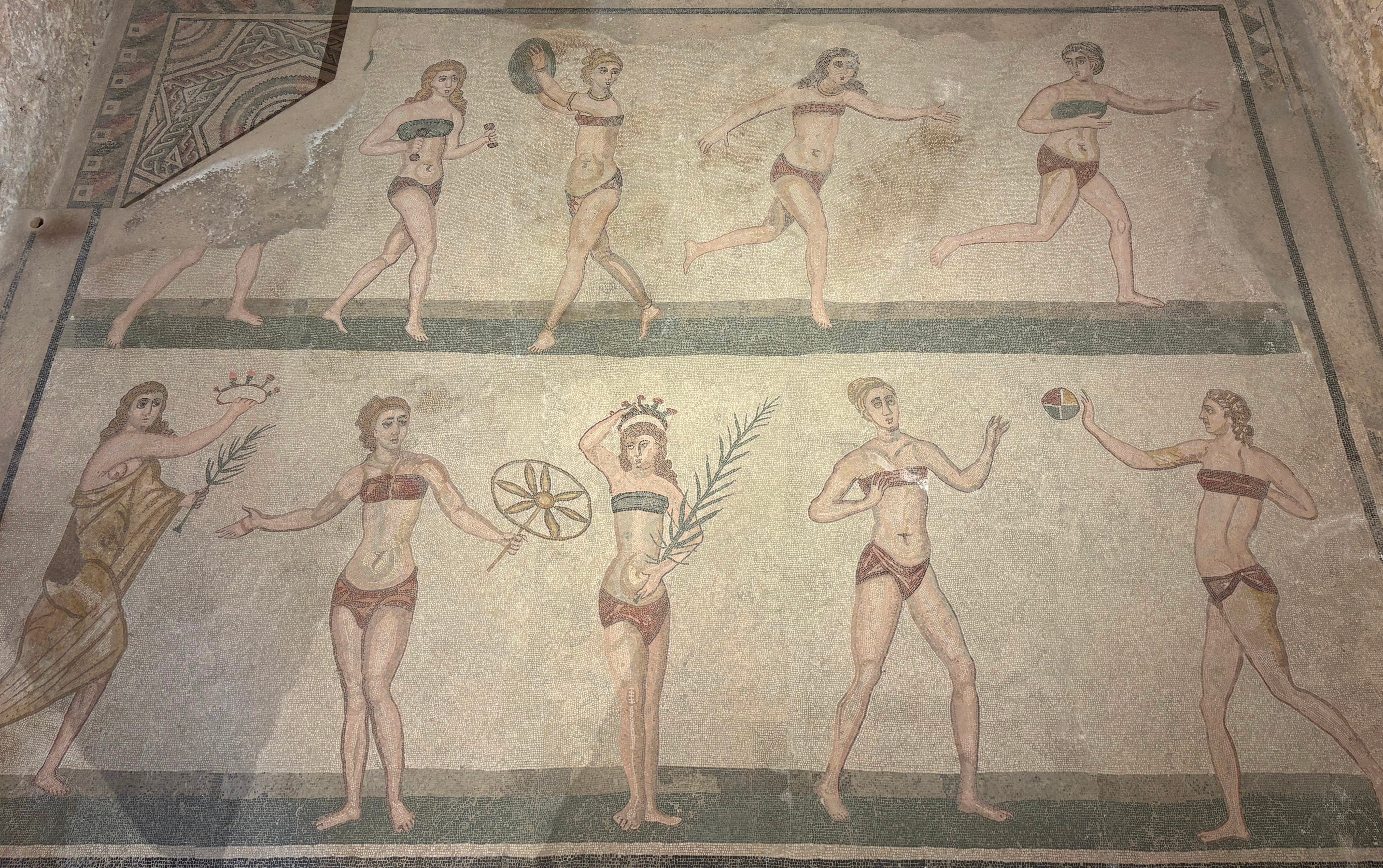
Where did all the good times go?
Even if there has been a gradual relaxation in archaeological literature around toys and play, it seems to me that the further back in time you go, the less we imagine people laughing and playing. My first guess is that some of this archaeologists of pre-historic periods fending off the accusation that they are ‘making things up’. They present their theories, explain their sites and finds, and very often (speaking from experience at conferences), somebody will still put their hand up and ask ‘but how do we really know what they were thinking?’
It isn’t an unreasonable question but, in my experience, archaeologists are usually pretty good at answering it and the people asking it don’t really want any answer that isn’t ‘because we have some writing that tells us’. Archaeologists of periods and places without writing tend to think hard about their theories, because they need to be clear about what we can and can’t assume or guess when working exclusively with the things people made and shaped. They are also used to people being sceptical. So I think some of their armour is to speculate as little as possible: no, we don’t really know that it was a toy or that it was fun, but we do know that it was made of terracotta and it was a box.
My second guess is that it is about archaeologists defending the people they study. When the stereotypical views of prehistoric people, especially stone-tool using people, is the Flintstones or diagrams of the ‘ascent of man’, archaeologists studying these societies have to be their spokespeople. They are voices against a tide, insisting that these people were complex, interesting and worthy of our attention and respect. In that fight, I can see why archaeologists might unconsciously or consciously avoid anything that seems frivolous or trivial. Talking about things that people made as ‘votive’ or ‘ritual’ objects surrounds those societies with a sense of mystery, or perhaps of religious significance and deep thought about life and the universe.
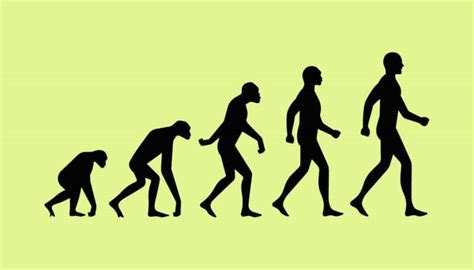
My third guess is that my second guess (archaeologists not wanting the people they study to seem ‘silly’) accidentally plays into stereotypes that people have about the deep past in general and the prehistoric past especially: that life was, as the 17th-century intellectual Thomas Hobbes described it, ‘nasty, brutish and short’. Hobbes may have been a philsopher with a pretty hefty axe to grind, not a historian or an archaeologist (the latter didn’t exist yet). He may have been living before any major increases in average life expectancy in comparison to deep prehistory (those would come more than a century later with anaesthetic and antiobiotics). And he may have been living at a time of massive-scale violent conquests encompsssing every continent except Antarctica. But those details didn’t suit his argument and in any case he was telling a story that people loved hearing and have enjoyed ever since, about how we moderns are better than what came before.
I’m not saying nothing ever got better (or worse) in history or that things don’t change over time. However, Hobbes was part of an intellectual movement that was in the process of casting people long ago as fundamentally different from us. It was the beginning of those unsmiling dioramas and an imaginary world in which people never had any fun because how could you possibly have fun in a world where you would probably not make it past your 30s, might get eaten by a lion or die of an eye infection? Surely, every day was just an endless drudge of skinning deer and knapping flint and sweeping rhino bones out of the cave? Or the house, if people did that. (They did, not least in Çatalhöyük).
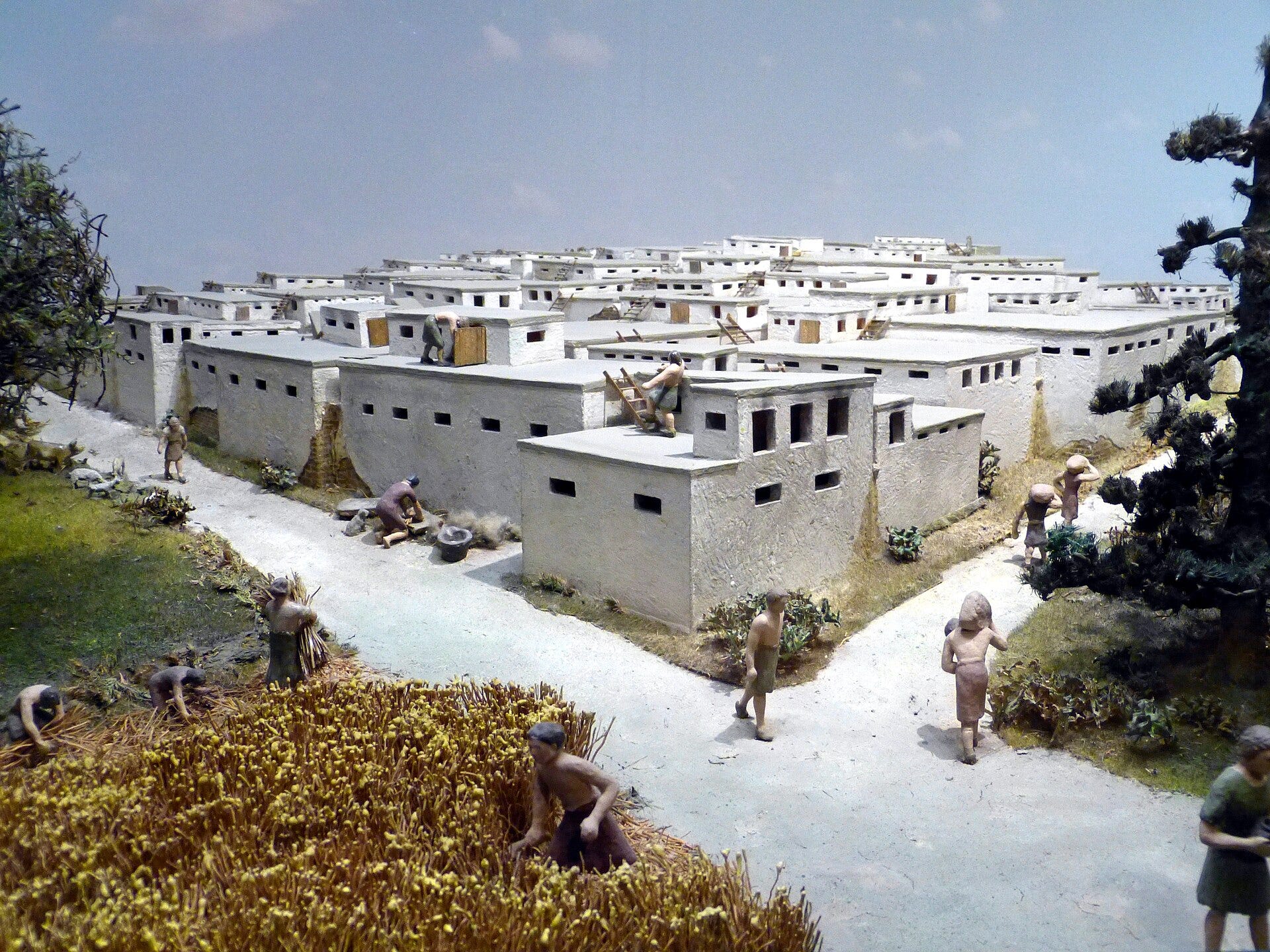
The thing is, that just isn’t what being human is like. People laugh in the most terrible circumstances.2 Children find ways to dance and play in horrific situations. And that is the resilience of the human spirit in places of unusual terror - people laughing and playing in the knowledge that they have been dealt a devastating hand in comparison to most of the world around them.
For people in the Neolithic or the Bronze Age, whatever Thomas Hobbes thought about their reality, to them it was just life. Maybe they hoped that one day people would live longer or safer or more comfortable lives. Early ideas of the afterlife or heaven or deities often involved eternally young or strong or unusually well-fed figures and places of plenty and luxury, so those seem like things they could and did imagine. Likewise, I really hope that one day people live longer, safer and more comfortable lives than we do today but how sad if those people, looking back on us, saw only our frailties, our conflicts and our material deficiencies. What if they look back on us and assume we never felt joyful or silly because how could we when life was so terrible? They would be missing out on so much play, laughter and whimsy.
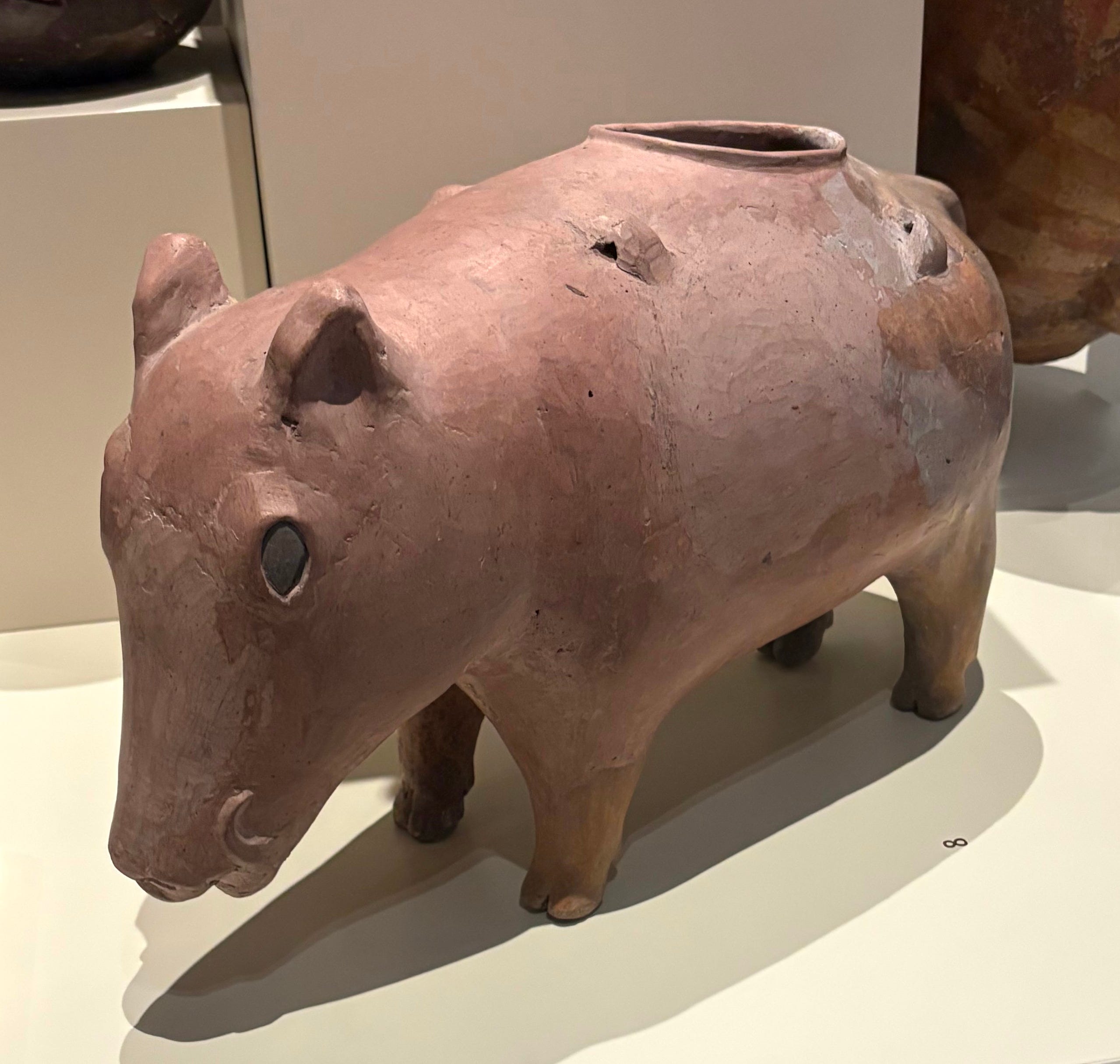
Of course, if they choose to try to understand our lives as we live them, the good and the bad, they might sometimes get it wrong. They might find things hilarious that to us were terribly serious or completely mundane, but it seems like a risk worth taking! So let me take it now: maybe this terracotta piggy, made c. 6000 BCE, was a terribly serious object with its cute little curly tail and its smiley little tusks and its up-turned brown eyes, but maybe, just maybe, it was a cute little piggy and it made people smile.
For example, Kamp, Kathryn A., ‘Where Have All the Children Gone?: The Archaeology of Childhood’, Journal of Archaeological Method and Theory, 8.1 (2001), pp. 1–34. Specific studies include: Egan, Geoff, ‘Children’s Pastimes in Past Time ‒ Medieval Toys Found in the British Isles (with Observations on Some Excavated Dice)’, in Material Culture in Medieval Europe, ed. by Guy De Boe and Frans Verhaeghe, I. A. P. Rapporten, 7 (Instituut voor het archeologisch patrimonium, 1997), pp. 413–21; Laes, Christian, and others, ‘Children, Burial and Death.: New Perspectives for the History of Childhood in Antiquity’, L’Antiquité Classique, 84 (2015), pp. 259–69.
Comedy shows were one of the ways people coped with life in World War Two concentration camps: Peschel, Lisa, ‘Laughter in the Ghetto: Cabarets from a Concentration Camp’, European Judaism: A Journal for the New Europe, 53.2 (2020), pp. 49–61