

If this, then what?
From hypothesis to theory

Hello,
Greetings from Sri City, Andhra Pradesh. I got here very late last night and have spent today balancing being inducted with unpacking. I remain very excited about my new job here and about being on a gorgeous campus. Today’s wildlife has included a really quite large lizard (at least if you come from somewhere without regularly occurring wild lizards) and these lovely creatures:

If you thought that might be what this post was about then, no. Sorry! I just thought they were amazing. If this is what you see on the way to work then… don’t step on them by mistake. But they are not exactly historical and I am no biologist.
What I’ve been thinking about this week is something else. I’ve spent much of the last several weeks at one conference or another, proofreading a fascinating book by a friend and considering what I want to teach to students in a new institution. It has all combined to get me thinking very hard about what historians mean when we talk about theory and why this means that we disagree so much sometimes, not just about which theory to use but even whether to use theory.
Just tell it how it was!
It is actually easier to start from the ‘why use theory at all?’ question than ‘which theory is best?’ question. That is because ‘which theory is best?’ assumes you already know what theory means and agree we should be using it. Why use theory at all is a good way into exactly those things. One answer, and the one I prefer, to why use theory at all is because if you don’t use theory (and I will explain what I mean about that in a second, I promise) you will still be using one but without acknowledging it and that makes it more likely that assumptions or logical gaps in the argument won’t get spotted.
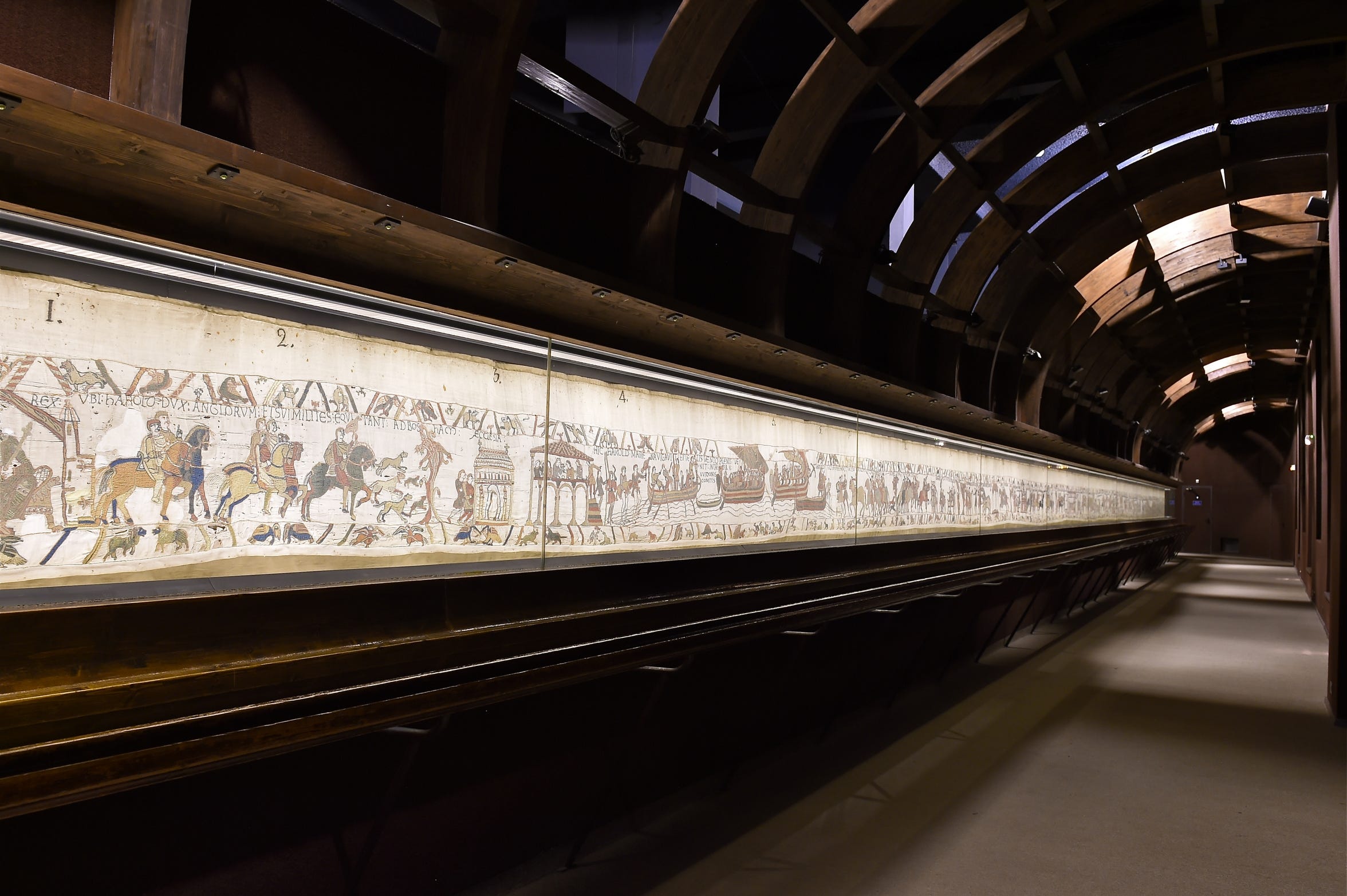
The ‘just tell us what happened!’ response to theory is rooted in the idea that history is a set of facts about what occurred. And if that is all you are looking for then maybe no theory is required. Who fought who in England in 1066? Making a list of the people involved is an exercise in finding out facts that, for the most part, are not that difficult. William of Normandy, Harold Godwinson, Harald Hardrada. Why am I using 1066 as my example? Partly because it is a fairly well-known historical event and mainly because it has been in my news feed a lot this last week, too, owing to the embroidered record of it, the Bayeux Tapestry (which I’ve also written about here and here) going on display in the UK. If it is not well-known to you, don’t worry, I will tell you as much as you need to know to follow my argument and there are some very interesting resources available here.
For most of us, though, including whoever embroidered the Bayeux Tapestry (‘whoever’ plural, not singular: it was not a solo project!), ‘in 1066 three named men fought each other and the winner became King of England’ just isn’t enough. As the tapestry makes abundantly clear and as is implied by the word ‘battle’, it wasn’t just three men. It was hundreds or thousands, each making their own choices about who to follow and why. And anyway, why were they fighting? To be King of England, sure, but why in 1066 and why them? Some of the answers to this look deceptively simple. They were fighting in 1066 because that is when the previous king died. Harold Godwinson (the one who is not getting shot in the eye with an arrow in the Bayeux Tapestry) was the most important noble in the land. William claimed the previous king had gifted him the throne. Harald Hardrada had a big army and his ancestors had also been kings of England.
In reality, though, we’re already a few steps into theory even with these ‘facts’. We certainly have to know about and accept various things that the people involved in these events apparently believed to be true.
There can only be one king at a time of a particular area;
That area should remain one area, so that fighting for it must mean fighting to rule it, not just to take some territory off it for yourself;
That one person, a king, should rule a particular territory;
That other people should fight for a king when he asked them to, including perhaps to seize other lands, not just defend what he already has (which is where those people following him probably live);
That in order to fight to rule a kingdom, you needed to have some reason why you should;
That ‘good’ reasons for saying you should rule a kingdom ought to relate to your relationship to the previous king (or perhaps his predecessors).
None of these things are necessarily true in any time or place. All of them have not been true in other times and places. But they were true in 1066 in England and its surrounding regions because people believed they were and acted accordingly.
To explain the actions of any of the leaders involved in the shenanigans of 1066 (spoiler: William won and because William I ‘the Conquerer’ of England), we need to have a set of ‘if this… then…’ hypotheses in mind. If a king dies then other people can/might/will compete to replace him. If there is no absolutely clear rule of succession then conflict over the succession is more likely. If rival leaders fight for kingship then the one with the [best troops/best strategy/best right] will win. Each of these is a hypothesis. When we know what the outcome of the fight was, in the case of 1066, then that might help to prove the hypothesis. For example, if I have hypothesised that, without a clear rule of succession, conflict is more likely when a king dies, then the events of 1066 suggest I might be right. The previous king, Edward (often known as ‘the Confessor’) did not have any children. As a result, the most common route to succession in this time and place - eldest son inherits from father - did not apply and what the next best options were remained uncertain. Hence, all three contenders could make their case that it should be them.
When we don’t know something about the past, hypothesis can work the other way. We might come up with a hypothesis, such as that people were more likely to fight for a particular contender to the throne based on where they were from rather than the political issues. In the case of 1066, for example, we don’t know exactly who fought for any of the leaders. We know less and less about their soldiers as they get lower down the social hierarchy. We might, then, go looking for evidence that might not have been collected or might not have meant much before we had this hypothesis to work from. For example, how many people can we tell came from one area or another based on their names or what the sources tell us about their home cities, or even anything we learn about their culture? If we find that most of the soldiers fighting for William were from Normandy, most fighting for Harald (Hardrada) were from Scandinavia and most fighting for Harold (Godwinson) were English, based on any clues you can find about their identities, then that suggests the hypothesis is correct. If people were weighing up the politic arguments carefully, one-by-one for themselves, then you might expect more disagreement. Some people from England might have thought that Harald (Hardrada) actually had the better claim. Some Normans might still have thought that Harold (Godwinson) should be king. But if people mostly followed regional loyalty to battle, then each leader would be represented by people from their area, who didn’t care as much about the political arguments as about supporting their ‘local’ lord. (This does seem to have been what happened, for what it is worth.)
From hypothesis to theory
So far, I’ve been talking about hypotheses, or ‘if this, then that’ statements. These are also used in science all the time too. There they are easier to test. ‘If I put the blue chemical into the red chemical then… based on everything I already know… the resulting liquid should be purple.’ The nice thing about science is that, a lot of the time, you can do the test over and over to see: does the liquid turn purple when you add the red and the blue liquid together? In history you have to find more examples that show that yes, when leaders fight for a throne, often it is people from their region who fight for them, rather than a cross-section of people convinced by their legal arguments.
Historical theory is really just a term, I think, for extrapolating that single ‘if this, then that’ hypothesis into a general rule of a way of suggesting what did or should have happened in any other case where some or all of the ‘ifs’ are the same. Saying that when a king dies without an obvious heir, some people with claims, based on their ancestors or relationship to the previous king are likely to fight, with the help of people from where they come from, to win the right to call themselves the new king’ could be a theory of succession for medieval Europe (and a lot of other places!). Once you have this theory you can do things with it. Say, in another medieval European region, where there isn’t as much written and visual material, we only know that a king died without an obvious heir and that, in the same year, a war broke out between three other people, one of whom became king. None of our sources, which are very brief, tell us who the people are or what they were fighting about, but we might use our theory of succession to suggest that they were probably fighting over who got to be king next!
Theories can get a lot more complicated than this. Marxist theory, for example, is a vast, complicated set of ‘if this, then that’ concepts that scholars argue about all the time. ‘If a small aristocracy owns the means of production in a particular time or place, then certain things will likely be true in that society’. But what do we mean by ‘the means of production’? What exactly counts as a small aristocracy? Or even an aristocrat? And of the list of ‘certain things’ that will be true, how many scholars agree? Some may prefer fewer or more or different certain things, though there is often a lot more agreement than scholarship implies. Scholars can seem very angry about a disagreement over what might result from a specific social organisation, while actually agreeing about a lot of other results. For example, Marxist scholars usually agree that in a society where a small group that defines itself as better than others (which is what aristocracy literally means) owns most of whatever makes people in that society rich or keeps them alive (or both), for example by owning land that other people have to farm for them or controlling tax on markets, that society will probably display big differences between how the ‘haves’ (those aristocrats) and the ‘have-nots’ (the people who work for and pay taxes to them) live because the aristocrats have more resource and also want to maintain their appearance of being ‘better’. They will likely eat differently, dress differently, live in different houses. In such a society there will be limited representation of different points of view because that might challenge the aristocracy. And those who own the means by which everybody lives will probably fight pretty hard to keep it, and maybe get more of it (and now we’re back to those men fighting to be king).
Crucially, while all of that might seem pretty obvious (and I think it is), somebody with a different theory will explain how that society works differently. Take somebody who subscribes to what was a common ancient and medieval theory: that God or the Gods or Fortune determine the fates of humans and reward certain kinds of moral behaviour. According to this theory, in the small fictional kingdom above where a king dies, three men fight and then one of them becomes king, the reason wasn’t a succession crisis but divine intervention, in causing/allowing the previous king exactly when that happened and choosing the best man, possibly in the world, to be the victorious contender. That theory might explain that aristocrats dressed, ate and acted differently because they were better people, so they had more refined tastes, more elegant manners, etc. They might fight for the throne because a divine force caused them to know that they were what the community needed to keep it safe and move it forward.
I am hugely simplifying both of these theories. I am also choosing one of the most extreme opposites of the Marxist theory. Very few scholars of history hold to the theory any longer that the divine guides what happens at the level of individual battles or chosen imperial successors. But all theoretical debates are really like this one, I think. ‘If this happens…’, ‘Okay, but what exactly do you mean by ‘this’? What are the critical features of ‘this’ situation and what aspects are unimportant?’ ‘… then that will happen.’ Also fine, again, what exactly do we mean by ‘that’. Kings might fight a war of succession, but the theory of succession cannot tell us exactly who will win or how. For that we might need another theory about, e.g. what happens if two armies of different sizes and skill and general health meet each other for a battle.
Can’t we do without?
From what I’ve just said, I clearly don’t think we can do history without theory. Without theory we would have no real way of ever asking why anything happened, or how. We would certainly have no way of talking about how one set of events might be similar to or different from another. We would just be saying ‘the king died, and three men fought a battle’. Cool. The end. Nothing more to see here. Nothing more we can do. Except, and for me this is the real problem, ‘we’ (meaning schoalrs in general) don’t do this. If people who said they wanted nothing to do with theory simply said ‘well, we have no direct evidence that the king dying and these three men fighting had anything to do with each other so I guess we can’t say if they did’, I would not necessarily find that very interesting history but I would be fine with it as a message. What most often happens, though, is that scholars say that the way was clearly about succession to the throne, but if they are refusing theory, they do so without saying why they think that.
Because it is just common sense? Because it is obvious, isn’t it? It just… fits, doesn’t it? Well, sure, maybe. But only if all of those things we looked at earlier about how people understood units of territory and ideas of kingship were true in this time and place. If they weren’t, or if we don’t know, then maybe, just maybe, the king died and those three lords went to war for a completely different reason. Coincidences are actually scarily common in history. Things happen in the world all the time that are connected to each other in complex ways and things happen all the time in the world that are, to all intents and purposes (unless you subscribe to some sort of theory that explains everything, and those are weird) completely unconnected. That is why not stating or thinking about a theory is so often a problem, because it means that people are not looking very hard at what ought to be true for their commonsense to work, and whether it actually was true.
So far, so obvious, right?
If that is all theory is - being clear about what things you think are or should be true for a particular thing to happen - then what is the problem? Why do some people insist we don’t need it at all? One reason is that people too often do act as if their theory explains everything or at least much more than it can. As in the case above, a theory of succession can tell you why some people might fight for a throne and maybe why lots of people fought for them. It can’t tell you why one of them won or lost. It doesn’t explain what makes a good king or a bad king. It doesn’t explain why people might sometimes pretend that somebody who had a much better claim (according to the theory) had a worse theory in order to support somebody else. Those all require different theories about different things or thinking about why a theory that works almost all the time, doesn’t this time. If people promote their theory so hard that it seems as if they are selling snake oil, that puts people off.
Another reason people sometimes put forward for not liking, or not using, or not being interested in theory, is that it is full of jargon. This is often true. Theories are ways of making complicated reality into something simple enough to grasp and compare. So is jargon. ‘Person’ may not seem like jargon but it is actually a really complicated bunch of physical characteristics (a body with features that mean we recognise it as human not, e.g. a hamster), and intellectual/philosophical ideas (a person is usually considered to be somebody who thinks and feels and acts in the world, and who is recognisably unique and thus distinct from other persons). The difference between person and, say, post-modernism, isn’t that one is more jargon-y than the other but that post-modernism (a theory that says what people say is what they say: it isn’t reality, it is a reflection of their perspective and motivation and nothing more) isn’t so important in everyday life that we all use it all the time and so know, without really thinking about it, what it means, at least in general terms. But that can still mean that engaging with a theory you haven’t met before, especially if it is building on other theories that are also not familiar, can feel a bit like having to learn a new language that everybody around you thinks you should already know.
Finally, another reason why people sometimes reject theory, I think, is because it can be uncomfortable to put common sense and what is ‘obvious’ under a microscope. It can be strange to realise that not all people everywhere have thought the same things were obvious as us, that despite being so very similar to us, they thought different things were important. Not using theory really means operating with the theory that people in the past, everywhere and at all times, thought and acted exactly the way we think people act now, in ways that make sense to us. But it has the advantage of not demanding that we examine closely why those things make sense to us and whether people really do act that way (even now).
For some scholars of the past, for example those writing in the tradition I’ve outlined above where historical events were proof of a divine and moral framework, not examining those things was actually part of the aim. Their theory insisted that it was true, in all times and places. The scholar’s job was to explain how the facts fitted. If what you want, though, is to understand why and how people acted in the past on their own terms, what it was ‘really’ like to be them and act in their world then, ironically, since theory is so often contrasted with ‘real’ history, using just facts, you actually have to have some theory. You need some reason for saying that one way of understanding their past makes more sense than another and some way of spotting and understanding when their common sense was different from yours/ours.
Theory isn’t the bad guy and it isn’t the magic solution. It is another shorthand, a word for something much bigger and more complicated: a set of tools for talking ourselves through the core questions that make the past fascinating for most of us: ‘if this happened, then why did that happen next?’
A lot of people these days want to reject theory? Or at least to stick with a traditional theory (Britain is a white nation which civilised 25% of the globe).
What we need epistemic humility (I had to look that one up).