

Told you so!
Or the complex marriage of perspective, the past and the possible prospect of post-truth

Hello,
Happy Friday and wherever you are I hope you’re well. Maybe (hopefully!) you also have time to grab a coffee, settle somewhere quiet and contemplete THE TRUTH, or at least, things that might be true and how we know.
Over the last few weeks I’ve talked mostly about places I’ve been and historical things people have found (including in unexpected places) but this week I wanted to dive into something a bit… chewier.
Popular questions
There are a few questions that come round over and over if you are a historian, and they are all good:
What really happened [at the Battle of Waterloo/during the US Civil War/to the Roman Empire]?
How do you know?
What’s the use of knowing anyway?
What is it that you actually do?
Leaving aside the bits of being a historian that are like lots of other jobs (emailing people, drawing up budgets, sitting in meetings, etc.) the answer to question 4 is really the same as the answers to questions 1 and 2, plus teaching other people the answers to 1 and 2.
What really happened?
I don’t know much at all about what happened at the Battle of Waterloo, or during the US Civil War or about a million other things that I don’t work on. I know quite a bit about what happened to the Roman Empire and the various other things I do work on. Above all, I know how I know what I know: I know what evidence survives for specific processes and how I or somebody else has joined them together with what particular assumptions or hypotheses. I know how reliable one story is versus another and whether it is a story that tells us about the whole Roman Empire or just a bit of it. This, in historical terms, is truth but it isn’t a single complete and correct answer.
We’ll never know everything that really happened in any given moment of the past. And anyway, what do we even mean by ‘really’? The world looks different to each of us all the time and different again when we rememeber it. But there are things we might agree on. There are events and background realities and broad sense of ‘the way things are/were’ that we have in common and that make sense of our own past when we look back. A nineties TV show isn’t usually just a show that was made in the nineties. It is a show that looks and sounds and feels like the nineties (and what a nineties show looks and sounds and feels like is, of course, diffeent if you’re watching it in the UK, India, Türkiye, or wherever). The in-jokes, the background music, the fashion, are all part of a general package that was the nineties, in which people still lived very different lives with very varied points of view. And in the nineties, things did happen that can actually be known. Specific songs topped the charts, particular politicians won elections.
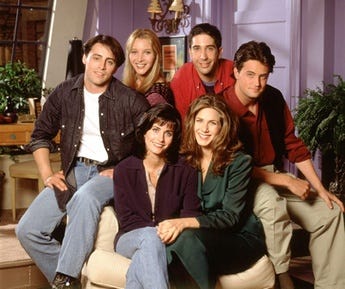
Historical truth, though, isn’t those facts. They are part of it. You can’t have historical truth without any facts. But historical truth is much closer to the amalgam of what you know and how well you know it than it is to a list of true but quite simple statements like ‘Tony Blair became UK Prime Minister in 1997’. It isn’t who won that election but why, how, and how much we do and don’t know about those questions. It is knowing the broad sound and look and feel of the nineties while being aware of how specific a particular TV show is to where it was made or the niche audience it was talking to. The truth, really, is a method for establishing a reliable reflection of what can be known from current evidence and how sure we feel about it.
Scholars can and do disagree. Lots of things are not completely certain. There is always more of the past to explore. Every time somebody does, we need to decide how much the new information changes what we thought before. And each time somebody puts forward a new perspective it is also a perspective on what counts as evidence or a plausible way of stringing it together. Being able to say ‘this is not just made up’ or ‘this is a reasonable understanding of what we know’ is the point of the exercise, not to have the final word.
Speaking the Past
This came up for me in a recent discussion about oral history. Now, for what I do, oral history, as in what people alive now say has been passed down to them by word of mouth about what happened in the past, doesn’t come up all that much. What I write about and research mostly happened well over a thousand years ago and, in most contexts (at least all of the ones I work on) story-telling traditions don’t last that long: stuff eventually either got written down or forgotten about.
In some cases, it gets written down and forgotten about, for extra fun! There are a series of texts, usually called ‘the Welsh Triads’, that are preserved, in their earliest written form, in a 13th-century manuscript, but based on the words and phrases they use and the people they sometimes name, they would seem to record things originally from much earlier, probably going back to the 7th century CE. They are called ‘triads’ because they record things in threes and it has been suggested that they were mnemonics, or reminders, for poets, like a band’s set-list for a gig. The poet could use the triads to group together sets of stories or mix them together for a particular audience from a collection of tales they he (or perhaps she) had memorised. The problem is that nobody now remembers a lot of the stories, so we are left with some extrmely confusing written material. Take this one, for example:
Three Principal Cows of the Island of Britain:
Speckled, cow of Maelgwn Gwynedd,
and Grey-Skin, cow of the sons of Eliffer of the Great Warband,
and Cornillo, cow of Llawfrodedd the Bearded.1
Anyway, mostly, historians of earlier periods encounter our past through written sources, or images and objects. As a result, quite a lot of scholars of the ancient and medieval past don’t care much about oral history. ‘It isn’t really a problem for us’, is a something I’ve heard a lot from medievalists in discussions about oral history. Except that it really is. For example, as the Welsh Triads demonstrate, lots of things were passed down orally for generations before anybody ever wrote them down. That could be songs and stories and family traditions. It can also be things like place names, which were used for centuries in most places before anybody officially wrote them on a map. Still, eventually, they got written down, like the stories and songs, and that is mostly how we encounter them: in books. And until the last 50 years or so, things in books or on paper had a sort of magical allure for historians. They were somehow more real…
In fact, until recently, the western historical tradition (which is what I mean when I talk about History as a discipline) had a clear methodology for dealing with myths and legends, preserved in oral traditions, by people who were not educated (by the western definition): such myths and legends were to be ignored as ‘superstition’ unless they suited an argument that a scholar wanted to make based on other evidence. In that case, ‘local tales’ or ‘folklore’ or some such term could be brought in as a third-line argument to support a thesis built primarily out of the stuff of ‘real’ history, i.e. written texts (mainly) and material evidence (secondarily).
This all began to change from the 1960s and 1970s but especially from the 1980s, when scholars especially working in and about parts of the world that had been colonised by European powers, started looking for sources that could reveal different aspects of the past than those recorded in colonial archives. Mostly, this wasn’t about replacing the archives, but about recognising that a lot of life never makes it into official archives in any circumstances, and that this was likely to be even more true in societies divided so sharply into a ruling colonial regime and those it ruled (or tried to). Plus, even when things did get into the official archives, they told the story from a very particular perspective, that served political purposes which could mean it was a very different story from that told by other people involved.
I remember reading those early studies with excitement and some scepticism. I had been trained in the traditional methods after all: I had imbibed suspicion of things people said to one another without writng them down. How could you ever know that what you got out at the other end was anything better than Chinese whispers? (It was a few more years before I got stuck into why the term ‘Chinese whispers’ is part of the problem. What is ‘Chinese’ about them anyway, except to make the whole process sound like something exotic and foreign?) Still, it turned out that there are indeed ways to check what relationship oral accounts had to things that happened, as recorded by other means, at least in a lot of cases. The results showed that oral traditions can record things fairly accurately (by which, for avoidance of doubt, I mean simply ‘record things that actually happened’ not everything that happened because nothing can do that). They can keep track of it over generations, centuries and maybe even millennia.
The bigger the events and the more significant they became to later societies, the more likely they are to survive in the record. But oral traditions can also change records of the past very quickly for all sorts of reasons (even within living memory). That was a bit of a shock because one of the things historians had said in their objections to oral accounts was that, of course, they would be accurate while people were alive who remembered, because if somebody said something that wasn’t true, people would contradict them or call them out. The problem was when things faded from direct memory. Turns out, that just isn’t true. People can agree on collective accounts of things that differ widely from other accounts of the same things. And they can pass down facts through generations.
It isn’t you, it’s me
What to do, then, with stories that might be true but might not be? Or stories that contradict each other, that cannot both be true at the same time, or at least not completely?
Put that way, the question suddenly becomes a lot simpler: we do history with them. That is to say, try to get at something like what happened by identifying traces and echoes of the things that happened that are left behind and examining them carefully. It means looking at why, when, where and how traces were created, preserved and discovered, and how they compare to other traces, whether those are official documents, objects, buildings, collective memory compiled into songs and stories…
The idea that oral records were completely unreliable was only the dark reflection of the equally implausible notion that everything written down was somehow naturally reliable. Sure, back when we thought oral histories were all junk, people knew that written sources might have a pretty hefty axe to grind and sure, we might have to ‘filter out’ the odd talking bird, rampaging worm or wrathful divinity to get at the ‘kernels’ of historical information. But this is no longer how historians operate (well, some still do, but they shouldn’t).
We can now show plenty of examples of written traditions preserving things for centuries and millennia, but also making things up, radically changing their interpretation or misrepresenting them (intentionally or otherwise) within a short time of events happening. That’s just people. We are constantly telling ourselves and each other stories about how the world works and how it got this way. What matters is not so much how the stories are recorded, but how convincing they are to other people. And that depends on a whole world of things, including but not limited to:
what you are trying to convince people of (Little Red Riding Hood is a great story for convincing people that wolves are dangerous and that little girls shouldn’t wander around alone in forests. Its popularity does not prove that anybody anywhere ever thought that cross-dressing, talking wolves were a major threat to rural communities);
how many other people you are trying to convince and who they are;
what else they already know about whatever you’re trying to convince them of.
Perhaps the most interesting factor when it comes to history as a discipline, though, is what do the people you are trying to convince recognise as valid or trustworthy information? Do they think that things written down are more convincing than things spoken? Or is it the reverse? Do they place more trust in people from their own community or with particular credentials? Do they believe in ‘trusting their gut’ or in examining evidence?
It used to be said that a picture was worth a 1000 words. This isn’t a post about AI, but as I write it I am vivdly aware of the visual world changing. Do you trust a photograph any longer, or a video? Last year I went to a talk. It was a fun, interesting local history talk about a lead-mining community in North Yorkshire in northern England. The speaker, though, had used what would now seem like pretty primitive AI to generate ‘historical’ pictures that small Yorkshire mining town in the 19th century. It wasn’t the big issues that scared me, like an electric lightbulb hanging in a blacksmith’s workshop. It was the rows of tools in the background. They looked plenty convincing. After all, I don’t know a thing about iron working in practical terms. But I kept wondering, where did the AI generation programme choose those tools from? It almost certainly wasn’t a detailed, rigorous study of blacksmiths’ tools used in 19th-century northern England. It will have been a mishmash of stills from ‘period’ movies, maybe some pictures of museum dioramas. It is highly likely that most of those tools would not have been used at the same time, in the same workshop, or even for working metal. And having pictures like that in circulation makes it harder for some future scholar who does want to do a rigorous study of blacksmiths’ tools used in 19th-century northern England. (Well, maybe not those pictures because hopefully that future scholar would take one look at the 40-watt hanging from the ceiling beam and run a mile, but the tech has gotten more sophisticated since then.)
The History of the future
When some historians started using oral records, other historians said it was weakening or even attacking the discipline. How would anybody be able to trust what we said? These days, most scholars recognise that there are good and bad ways to use oral sources, just like there are good and phenomenally stupid things you can do with even the most old-fashioned, respectable, state-archive-documenty-documentary sources out there. Oral history and the methods developed for understanding oral records broadened the questions we can ask, the lives we can catch glimpses of and the ways we understand written sources as well.
As the lines between what survives from a particular past and what is just pretending to get blurrier by the day, AI-generated sources are absolutely not the new oral history. Unlike oral sources, which were things left from the past that scholars simply had not yet learned to recognise or respect for what they could tell us, AI generated historical material is simply made up. It tells us nothing new about the past, or different from what we already knew. It cannot uncover hidden perspectives.
But scary as I find the idea of chatbots speaking as contested objects or whatever, I also find myself cautiously optimistic that history has some of what the present moment needs. As a discipline, it has figured out lots of ways to work out the most accurate account of what probably did happen. It has frameworks for disagreement, that focus on refining a picture not just fighting over whose fantasy each person likes best. We depend on using many different pieces of evidence to see if they all suggest one explanation rather than another, developing and checking theories that can suggest what was possible or likely in a set of circumstances (which can then be tested against lots of surviving pieces of evidence), and basically, doing that over and over, as new evidence is discovered and new theories are proposed, circling a reality that will always be out of reach but to which we can and do get closer and closer on each pass. And we have gotten really good at establishing ways to say what a particular source is good for, and isn’t. The sheer volume of AI material is intimidating, but forgeries and misleading sources have always been with us. We know how to trace the provenance of a document or image (basically, where it was before it got here, whose hands it passed through and thus, often, whether it could possibly have been made whenever somebody said it was). We have methods for analysing internal details and styles of language or appearance to detect later additions to a story, and how to read texts for the things they tried to hide or never meant to reveal.
What’s the use of knowing anyway?
So we come back to the third of those questions that historians often get asked: what is the use of knowing about the past?
There isn’t just one good answer to this. There are actually a stack, including that for a lot of people it is fun and interesting and that, for many of us, it is a big part of how we tell those stories to ourselves and others about who we are, how we fit in the world and how things got this way.
Another answer that seems more and more important to me is that it is a framework for knowing how to know, for evaluating the authenticity, the accuracy and the usefulness of things that offer themselves up as sources of information. It is a way of reading the world for particular kinds of truth. It isn’t the only truth but it isn’t a bad one to build dialogue on: what is real and what is it saying? You don’t have to use historical methods just for looking at history, either. People who ask what the point is of knowing about the past are usually more interested in the present, and that is fine. Sometimes they see themselves as futurists. That is also cool. Right now, though, the present and the future both stand in need of some serious historical analysis.
Bromwich, Rachel (ed.), Trioedd Ynys Prydein: The Triads of the Island of Britain, 4th edn (University of Wales Press, 2015), p. 264.
I'm saddened by the loss of knowledge that happens just two or three generations after someone dies. But we're living in a new era that, AI fraud apart, allows each of us to record who we and our friends and colleagues and neighbours were. The smaller the intended audience, as you imply, the greater the probability of veracity.
So far I've plonked my memoir on Amazon, transcribed my dad's 1944 war diary, and done the same for a 1904 stone mason's records. They can all go on to Amazon, Ancestry, or booksellers' catalogues for free, or donated to a regional library or museum or local history society .
With a sufficiently wide distribution, some may survive.
Isn't that a great gift to the future?